

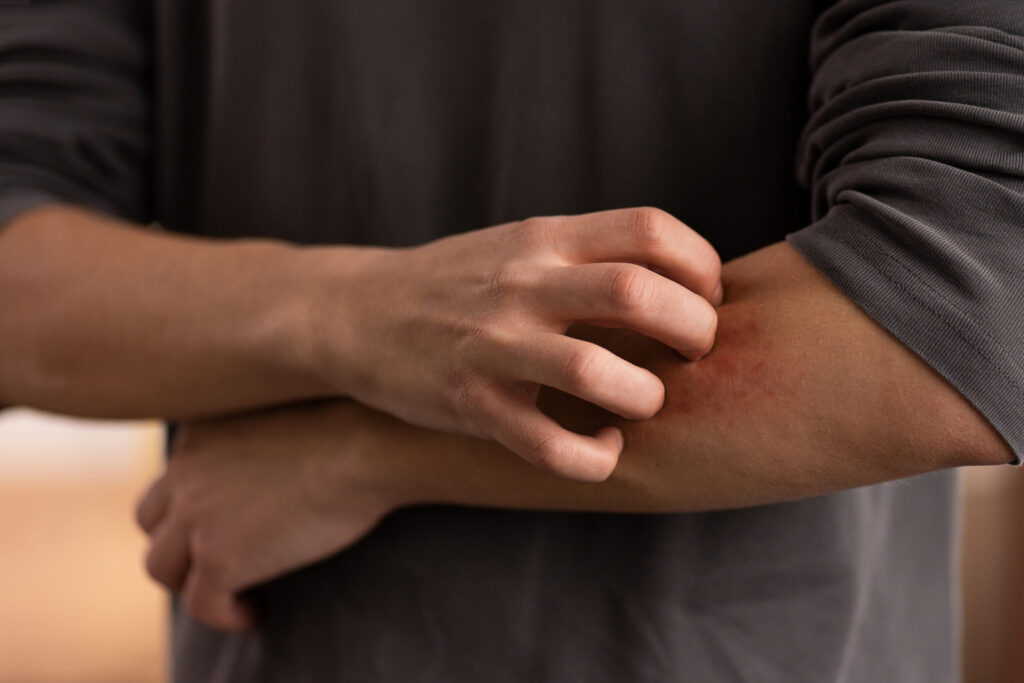
Itching can feel harmless at first. You scratch once, then twice. Before you know it, your skin feels irritated, sore, and restless.
If you’ve ever wondered why your skin won’t stop itching or what your body is trying to tell you, you’re not alone. Almost everyone experiences itching at some point. In most cases, it’s mild and easy to fix. Sometimes, though, it’s your body asking for attention.
Let’s break it down in a simple, friendly way—so you can understand what’s happening and find real relief.
Table of Contents
What Causes Skin Irritation and the Urge to Scratch
Itching is your skin’s way of reacting to irritation, dryness, or inflammation.
When something bothers your skin, tiny nerve endings send a signal to your brain. That signal creates the urge to scratch.
Scratching may feel good for a moment. However, it often worsens irritation later. Your skin, immune system, and nerves all work together here. Because of that, discomfort can come from many sources—not just the skin itself
Most of the time, skin irritation isn’t dangerous. However, when it lasts too long or spreads everywhere, it can affect your sleep, mood, and daily comfort.
Also Read : Vitamin D Deficiency
Common Signs That Often Accompany Skin Irritation
Skin reactions don’t always look the same. You may notice other signs, depending on the cause.
You might experience:
- Red or inflamed skin
- Dry, flaky, or scaly patches
- Small bumps, hives, or blisters
- Cracks or bleeding from repeated scratching
- Swelling or warmth
- Thickened skin after long-term irritation
If symptoms change how your skin looks or feels, it’s worth paying attention.
Also Read : Calcium Deficiency
The Most Common Reasons Behind Skin Discomfort
Also Read : Joint Pain
Skin-Related Causes (Most Common)
These causes affect the outer layer of your skin:
- Dry skin, especially in winter
- Eczema or sensitive skin
- Contact with soaps, detergents, or chemicals
- Psoriasis
- Hives or allergic reactions
- Fungal infections like ringworm
- Parasites such as lice or scabies
In most people, dry skin is the main trigger.
Also Read : Obesity
Is Itching Contagious? When You Should Be Careful
Also Read : Constipation
Internal or Systemic Causes
Sometimes, skin discomfort starts inside your body:
- Liver conditions
- Kidney disease
- Thyroid imbalance
- Iron deficiency
- Diabetes
- Certain infections
- Rarely, blood-related cancers
This type of discomfort often affects large areas and may not show a rash.
Also Read : 19 Powerful Ayurvedic Herbs
Allergies and Chemical Triggers
Also Read : Great Protein Sources for Vegetarians
Emotional and Psychological Triggers
Also Read : Trans Fats Myths
Different Forms of Skin Discomfort You Should Know
Localized Itching
This type affects one area, such as your scalp or arms. It often points to a skin condition or irritation.
Also Read : Spice Secrets
Generalized Itching
This affects your whole body. It may suggest internal imbalance or chronic illness.
Also Read : Vinegar Wonders
Acute Itching
Short-term irritation that lasts less than six weeks. Allergies and infections often cause it.
Also Read : Vitamin Balance
Chronic Itching
Symptoms that last over six weeks. This usually needs medical attention.
Also Read : Hair Care

Also Read : Mind-Blowing Garlic
What the Location of Skin Discomfort Can Reveal
Where you itch often gives helpful clues.
- Legs: Dry skin or circulation issues
- Scalp: Dandruff, lice, or product buildup
- Arms: Allergies or eczema
- Nighttime itching: Allergies, parasites, or nerve issues
These patterns help doctors narrow down the cause.
Also Read : How to Cure Sciatica
How Doctors Identify the Underlying Cause
Also Read : Clove Benefits
Medical Treatment Options for Persistent Skin Irritation
Treatment depends on what’s causing the irritation.
Also Read : Poisonous Foods
Topical Treatments
- Moisturizers for dry skin
- Steroid creams for inflammation
- Antifungal creams for infections
- Cooling lotions for comfort
Also Read : 11 Healthy Fruits
Oral Medications
- Antihistamines for allergies
- Short-term steroids for inflammation
- Anti-anxiety medicines for stress-related itching
- Nerve medications for neurological causes
Also Read : How to Make Herbal Tea
Light Therapy
Phototherapy can help with severe eczema or psoriasis.
Also Read : How to Cure Piles

Also Read : Shilajit Benefits
Home Remedies and Daily Habits That Help
Simple changes can bring real relief.
Try these habits:
- Moisturize right after bathing
- Use lukewarm water, not hot
- Choose fragrance-free products
- Wear loose, breathable clothes
- Drink enough water daily
- Use cold compresses instead of scratching
These small steps work because they protect your skin’s natural barrier.
Hot water and harsh soaps remove natural oils, which makes itching worse. Moisturizing within three minutes after bathing helps seal moisture into the skin.
Do: Choose heavier, fragrance-free creams to give your skin better protection.
Don’t: Avoid repeated scratching, even if it feels relieving at first.
Frequent scratching harms the skin and worsens irritation over time. Skip hot showers, harsh towels, and strong fragrances to help sensitive skin stay comfortable.
If symptoms keep returning, tracking triggers can help. Note weather changes, new foods, stress levels, or products. Patterns often reveal the real cause.
Also Read : 8 Mulethi Wonders
When Medical Advice Is Important
You should seek help if:
- Itching lasts more than two weeks
- Sleep becomes difficult
- You feel tired or unwell
- Weight loss or fever appears
- Scratching causes wounds or infection
In many cases, early care prevents itching from turning into a long-term issue.
Also Read : Gut Bacteria

Also Read : Triphala Benefits
FAQs About Itching
Can itching mean something serious?
Yes. Long-term or whole-body itching may signal internal issues.
Why does itching get worse at night?
Can stress really cause itching?
Yes. Stress affects nerves and immune responses.
Is itching always a skin problem?
No. It can start from nerves, hormones, or internal organs.
Can hormones cause itching?
Also Read : How to Improve Your Memory & Focus
Final Thoughts on Finding Lasting Skin Comfort
Skin discomfort may seem small, but it can disrupt your comfort fast. The good news is that most cases are manageable once you know the cause. Pay attention to your skin. Support it with gentle care. If itching lingers or spreads, don’t ignore it. Your body often whispers before it shouts. Listening early can make all the difference.
This information is educational and not a substitute for guidance from a qualified medical professional.
Also Read : How to Improve Your Five Senses