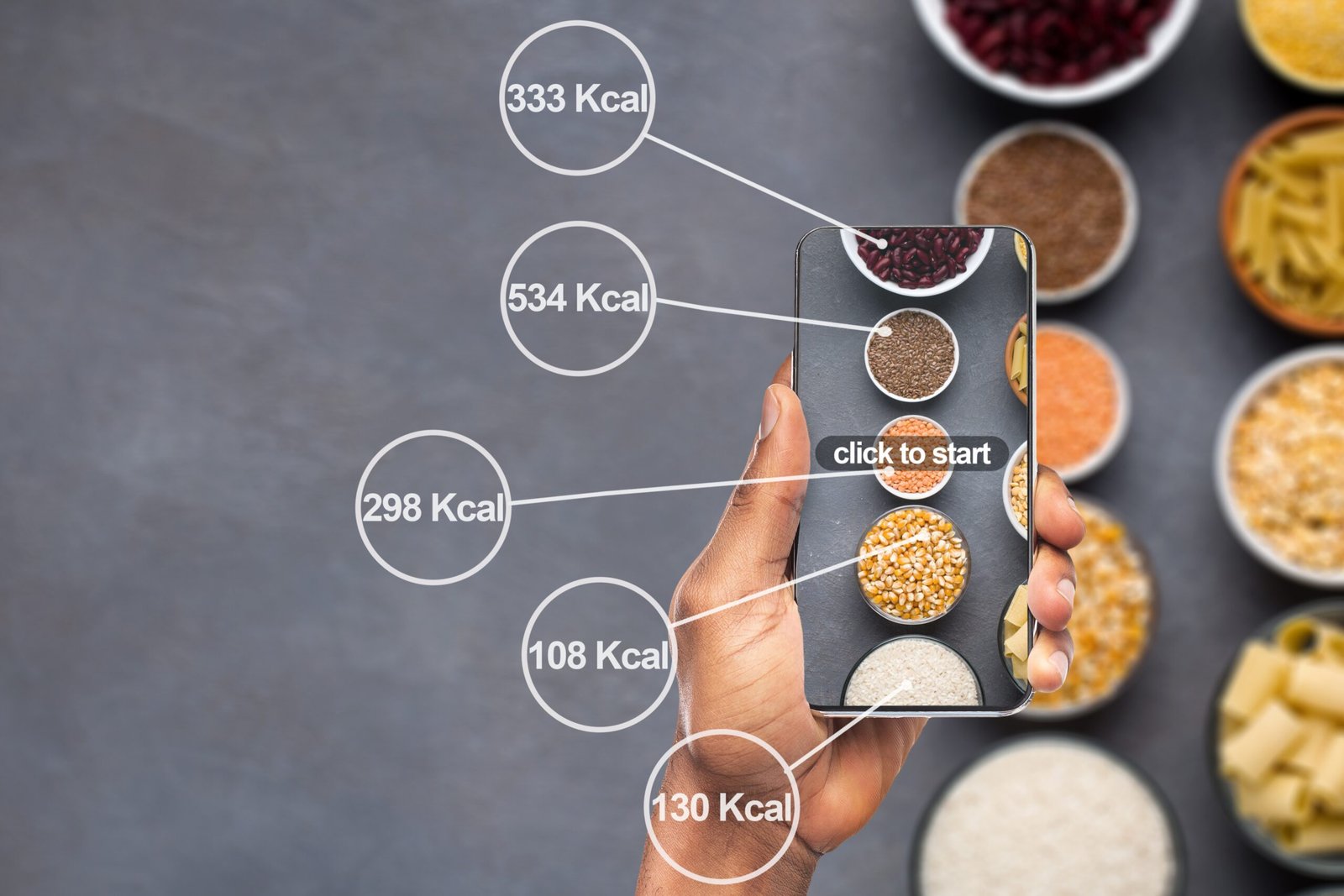
Counting calories gets tricky when your food comes from a family kitchen instead of a packet with a nutrition label. A bowl of dal can contain different amounts of lentils, oil, vegetables and water from one home to another. The same happens with sabzi, curry, rice dishes and rotis.
The good news is that you don’t need to find the exact dish in a calorie app. You can calculate a useful estimate from the recipe itself.
The basic process is:
Measure → Calculate → Cook → Weigh → Divide → Track
For a homemade recipe, first calculate the calories for the ingredients used in the whole dish. Then divide the total by servings or use the finished cooked weight to estimate calories in your portion.
Your result is an estimate, not a laboratory measurement. Recipe ingredients, cooking methods, oil, water and portion sizes can all change the final number.
Table of Contents
How Do You Count Calories in Homemade Indian Food?
To count calories in homemade Indian food:
- List the ingredients used.
- Measure the amount of each ingredient.
- Find a suitable calorie value for each ingredient.
- Calculate the calories for the whole recipe.
- Include cooking oil, ghee and other calorie-containing ingredients.
- Weigh the finished dish when practical.
- Divide the calories by servings or portion weight.
- Record the amount you actually eat.
For Indian foods, this approach is usually more useful than searching for one generic entry such as “dal” or “sabzi.”
ICMR-NIN’s Indian Food Composition Tables provide nutrient-composition information for hundreds of Indian foods, while USDA FoodData Central provides another established food-composition database.
A simple way to remember the process
Also Read : How to Calculate Macros in Indian Food
Why Is Homemade Indian Food Hard to Track?
Homemade Indian food rarely has one fixed recipe. Your dal may use more oil than another person’s dal. Your sabzi may contain potatoes, while another version does not. One roti may contain 25 g of atta, while another uses considerably more.
Recent Indian-focused calorie-tracking discussions and guides repeatedly highlight the same practical issues: mixed dishes, variable oil, shared pots and non-standard portions.
Recipes change from one kitchen to another
A calorie database entry represents a particular food or recipe. It does not automatically represent your family’s version.
For example, two dishes called “dal tadka” can differ because of:
- dal type
- amount of dal
- oil or ghee
- onion and tomato
- added vegetables
- serving size
- cooking method
So use database values as reference values, not as proof that your homemade dish contains exactly the same calories.
Cooking oil can change the total
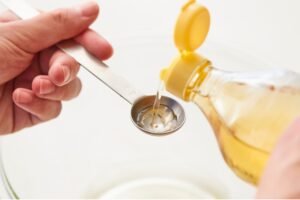
Oil and ghee are easy to overlook because they may disappear into the finished dish. Record them when you can. If the oil amount is unknown, don’t pretend you know the exact number. Make a clearly labelled estimate instead.
Portions are not standardized
A “katori” is a useful household measure, but it is not automatically one fixed weight. Your katori may hold a different amount from someone else’s.
For repeated tracking, you can measure your own usual bowl once and use that measurement consistently.
Cooking changes weight
Water can enter or leave food during cooking. That means the finished weight can differ substantially from the raw ingredient weight. The calories contributed by the ingredients do not simply change because water was added. But the calories per 100 g can change because the final weight changes.
That is why raw and cooked entries should not be mixed carelessly.
Also Read : Sodium Potassium
Step 1: List Every Ingredient in the Recipe
Start with the whole recipe rather than your plate. Write down everything that contributes meaningful calories. For example, a homemade dal might contain:
| Ingredient | Amount used | Calorie source |
|---|---|---|
| Dal | Measured amount | Food-composition data |
| Onion | Measured amount | Food-composition data |
| Tomato | Measured amount | Food-composition data |
| Cooking oil | Measured amount | Product/reference value |
| Spices | Measured or estimated | Reference value where relevant |
| Other ingredients | Actual amount | Appropriate reference |
Which ingredients deserve the most attention?
Also Read : Yoga vs Exercise
Step 2: Find Calories for Each Ingredient
Once you know the amount used, find a suitable calorie value. For Indian ingredients, ICMR-NIN’s Indian Food Composition Tables are a useful India-specific reference. The database covers key foods sampled across India and provides nutrient-composition information.
USDA FoodData Central is another established source. Its data includes different food datasets, including Foundation Foods, FNDDS and branded-food information.
Use the matching food state
This is where many calorie calculations go wrong. If your database value is for a raw food, don’t automatically apply it to the cooked weight.
Likewise, a value for cooked rice should not be multiplied by the dry rice weight.
Check whether the reference value describes:
Then make your calculation using compatible measurements.
Also Read : How to Strengthen Your Nerves
Step 3: Calculate the Calories in the Whole Recipe
Once you have the amount and calorie value for each ingredient, calculate the contribution from each one.
If the reference value is given per 100 g:
Ingredient calories = amount used ÷ 100 × calories per 100 g
Then add the ingredients:
Total recipe calories = calories from all ingredients added together
Simple example
Suppose an ingredient provides 350 kcal per 100 g and you use 150 g.
The calculation is:
150 ÷ 100 × 350 = 525 kcal
Repeat the same calculation for the other ingredients.
Then add the results.
The important point is that you’re calculating the whole batch first.
You aren’t trying to guess the calories in one spoonful before understanding what went into the pot.
Also Read : Biohacking
Step 4: Count Cooking Oil and Ghee
Cooking fat deserves its own step because it can be easy to miss.
Record:
- oil used for sautéing
- oil used for tadka
- ghee added during cooking
- butter used in the recipe
- oil or ghee added after cooking
- toppings containing fat
Current Indian calorie-tracking guides also identify cooking fat as a major source of variation between otherwise similar homemade dishes.
What if the oil was not measured?
Don’t create false precision. If you know approximately how much was used, record an estimate and label it as such. If another family member cooked the dish and doesn’t know the amount, you may need to estimate based on the recipe and cooking method. That estimate is less certain than a measured amount.
The goal is to make the uncertainty visible rather than hiding it behind a precise-looking number.
Also Read : Uric Acid
Step 5: Weigh the Finished Dish When Practical
This step becomes especially useful when your family shares food from one pot. After cooking, weigh the finished edible food without the cooking vessel.
For example:
Finished cooked dish = 1,000 g
Suppose your total recipe calculation gives:
2,000 kcal
You can now calculate:
Calories per gram = 2,000 ÷ 1,000 = 2 kcal/g
Therefore:
Calories per 100 g = 200 kcal
This approach lets you estimate different portion sizes from the same batch.
Recent recipe-calculation tools and guides use the same basic batch-weight approach: total the recipe calories, measure the finished yield, then allocate calories according to the portion weight.
Also Read : Iron Deficiency
Step 6: Calculate Calories Per Serving
There are two useful methods.
Equal-serving method
If the entire recipe is divided into equal servings:
Calories per serving = total recipe calories ÷ number of servings
For example:
2,000 kcal ÷ 4 servings = 500 kcal per serving
This works well when portions really are similar.
Weight-based method
Weight-based tracking is more useful when portions differ.
Use:
Calories eaten = total recipe calories × your portion weight ÷ finished batch weight
For example:
- Total recipe = 2,000 kcal
- Finished batch = 1,000 g
- Your portion = 180 g
Then:
2,000 × 180 ÷ 1,000 = 360 kcal
So your 180 g portion would be estimated at 360 kcal.
This is a recipe-specific estimate.
It is not a universal calorie value for that dish.
What If You Don't Know the Exact Recipe?
You can still make a useful estimate. The level of detail simply changes.
If you know the ingredients and amounts
Use the full recipe calculation. This gives you the strongest recipe-specific estimate.
If you know most ingredients but not exact amounts
Estimate the missing amounts and clearly label them.
For example:
“Oil amount estimated because the recipe was cooked by another family member.” That is more honest than displaying an exact-looking result.
If you know very little
Use a suitable reference food or recipe as a starting point. But label the result as a rough estimate.
A generic database entry should not be presented as the exact calorie content of your family’s recipe.
How to Track Calories When Someone Else Cooks
Try this four-step method
- Identify the main ingredients.
Ask what went into the dish.
- Estimate the cooking fat.
If the amount is unknown, make a reasonable estimate.
- Measure your portion when practical.
A food scale gives you more information than guessing from the word “bowl.”
- Record the result as an estimate.
Don’t turn an uncertain number into a false exact value.
For a shared family pot, the finished-weight method can be particularly useful when the dish is reasonably well mixed.
If the ingredients are unevenly distributed, however, the estimate becomes less certain.
Also Read : Zinc
Do You Need to Weigh Everything?
No. You can use different levels of tracking depending on how much detail you need.
| Tracking approach | What you do | Detail level |
|---|---|---|
| Detailed | Weigh ingredients and portions | Higher |
| Practical | Measure major ingredients and cooking fat | Moderate |
| Simple | Use consistent household portions | Lower |
| Rough estimate | Use a comparable reference food | Lowest |
Also Read : Anemia
How Accurate Does Homemade Calorie Tracking Need to Be?
Homemade calorie tracking cannot always provide an exact number.
The uncertainty may come from:
- ingredient measurements
- food-composition data
- recipe variation
- oil or ghee
- water content
- cooking yield
- leftovers
- food stuck to the pan
- unequal portions
So avoid thinking:
“My dal contains exactly 347 calories.”
A better interpretation is:
“Based on this recipe and portion, my estimated intake is around 347 calories.”
That small wording change reflects what the calculation actually tells you. Do not use an arbitrary accuracy percentage unless you have evidence supporting it. For example, one current Indian tracking page claims a 10–15% accuracy range, but that is not a suitable universal standard for every homemade meal.
Also Read : Fatty Liver
Common Mistakes When Counting Homemade Food Calories
- Logging a generic dish without checking the recipe
“Dal” can represent many different recipes.
- Forgetting cooking oil
Oil, ghee and butter can materially change the total.
- Mixing raw and cooked weights
Use a calorie reference that matches the food state you’re measuring.
- Assuming every katori is the same
Household bowls vary.
- Dividing everything equally
Four people eating from one pot does not automatically mean four identical portions.
- Counting the ingredients but forgetting toppings
Ghee, butter, cream, sugar and sauces can add to the total.
- Treating an estimate as an exact measurement
Your calculation is only as precise as the information used to create it.
- Recalculating the same recipe unnecessarily
If you repeatedly cook the same recipe with the same ingredients, save your calculation and update it when the recipe changes.
Also Read : Antioxidants
How to Calculate Calories in a Homemade Recipe: Quick Formula
Keep these formulas handy.
Total recipe calories
Total recipe calories = sum of calories from all ingredients
Calories per 100 g
Calories per 100 g = total recipe calories ÷ finished cooked weight × 100
Calories per gram
Calories per gram = total recipe calories ÷ finished cooked weight
Calories in your portion
Portion calories = calories per gram × portion weight
Or:
Portion calories = total recipe calories × portion weight ÷ finished cooked weight
Equal servings
Calories per serving = total recipe calories ÷ number of servings
These formulas are most useful when the ingredient data and food weights are measured consistently.
Also Read : Immunity
What About Packaged Ingredients?
If you use a packaged ingredient, the product label may provide a more appropriate reference for that particular product.
For Indian packaged foods, FSSAI’s labelling framework provides for nutritional information such as energy, protein, carbohydrate and fat on the label, expressed using specified reference amounts such as per 100 g/100 ml or per serving.
Check whether the label’s value is given:
- per 100 g
- per 100 ml
- per serving
- per package
Then make sure your calculation uses the same basis. For example, don’t multiply a per-100-g calorie value directly by a portion expressed in kilograms without converting the units first.
Also Read : Magnesium
A Practical Indian Kitchen Workflow
You don’t need to turn every meal into a laboratory experiment.
For a recipe you cook regularly, try this:
First time
Measure the ingredients.
Record the cooking oil.
Calculate the whole recipe.
Weigh the finished dish.
Calculate calories per 100 g.
Next time
Use the saved recipe.
Update any ingredient that changed.
Weigh your portion if practical.
Record the estimate.
This “calculate once, reuse often” approach can make repeated homemade meals much easier to track.
Also Read : Minerals
What Should You Do If Two Calorie Apps Give Different Numbers?
Don’t automatically assume that one app is correct.
Different entries can represent:
- different ingredients
- different recipes
- different cooking states
- different serving sizes
- different brands
- different databases
- different assumptions
For a homemade recipe, your own ingredient-based calculation can be more relevant than a generic dish entry because it uses the recipe you actually prepared.
FoodData Central itself contains multiple data types with different sources and purposes, which is one reason food-database entries should always be interpreted in context. If two entries disagree, first check whether they are actually describing the same food state and serving basis.
Also Read : Bones
The Bottom Line
Counting calories in homemade Indian food does not require finding a perfect database entry. Start with the recipe you actually cooked.
Measure the ingredients.
Calculate the whole recipe.
Count the cooking oil and other calorie-containing ingredients.
Weigh the finished dish when practical.
Calculate calories per gram, per 100 g or per serving.
Then record the portion you actually eat.
The result is an estimate, but a transparent estimate based on your actual recipe can be far more useful than pretending a generic “dal” or “sabzi” entry perfectly matches your plate.
And when you don’t know every ingredient or measurement, don’t give up. Use the information you have, make the uncertainty clear, and improve the estimate when better information becomes available.
Also Read : Iodine
Medical and safety note
Calorie tracking is a general nutrition tool, not a substitute for individualized medical or dietary advice. Nutritional needs vary between people and can change with age, pregnancy, breastfeeding, medical conditions and other circumstances.
If calorie tracking is causing significant anxiety, rigid food rules or distress, consider discussing your situation with a qualified healthcare professional or registered dietitian rather than trying to make your tracking increasingly precise.
Sources
- ICMR–National Institute of Nutrition, Indian Food Composition Tables.
- ICMR–National Institute of Nutrition, Dietary Guidelines for Indians 2024.
- USDA Agricultural Research Service, FoodData Central.
- Food Safety and Standards Authority of India, Labelling and Display Regulations.
Also Read : Gut Bacteria