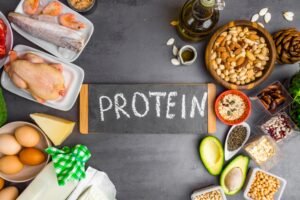
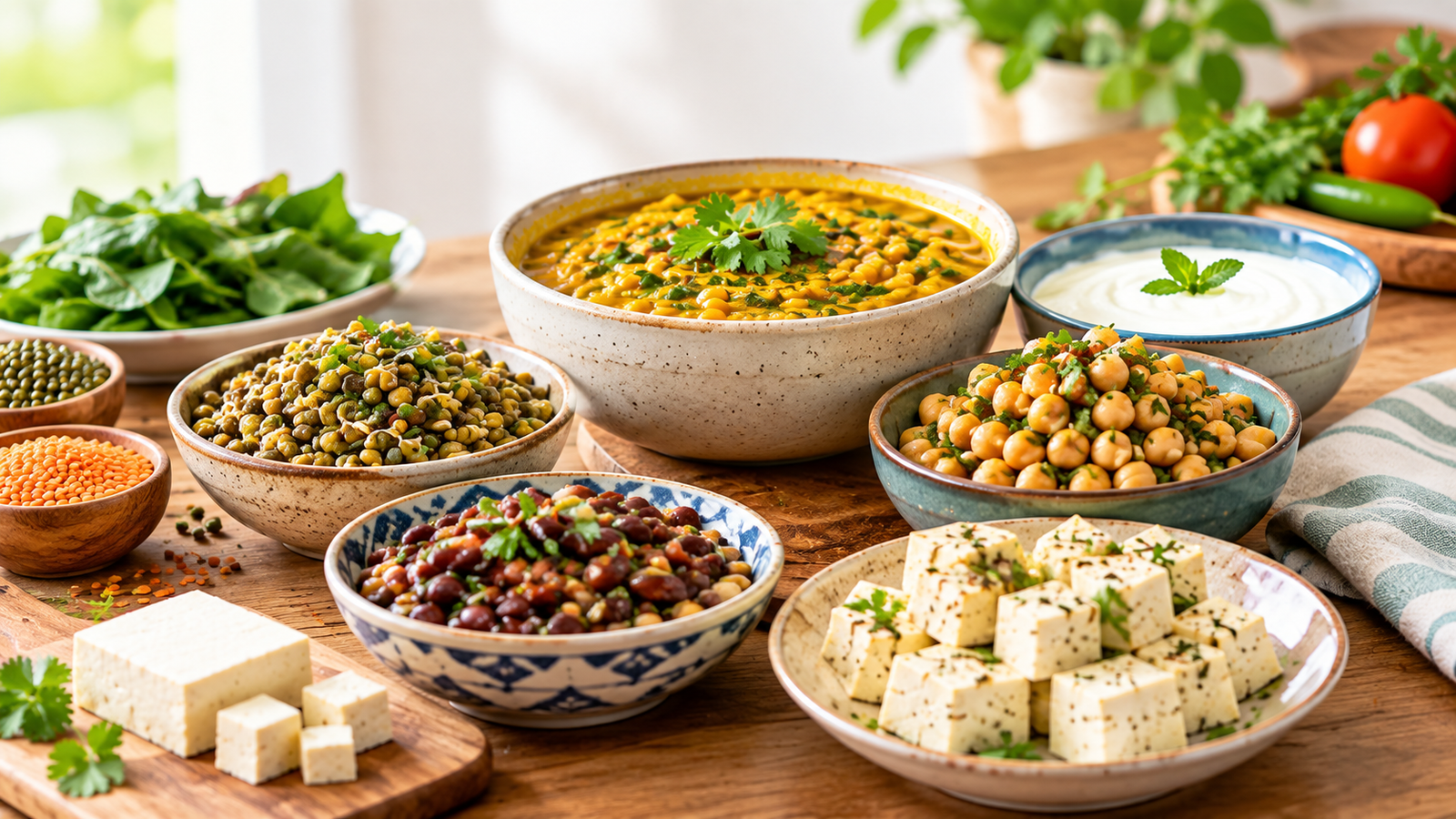
A well-planned Indian vegetarian diet can provide adequate protein through a combination of pulses, cereals, dairy or soy foods, nuts and seeds. ICMR-NIN uses 0.83 g/kg/day as the adult protein RDA under its stated high-quality-protein assumptions, while cereal-heavy lower-quality diets may need more. The practical goal is to spread meaningful protein sources across the day instead of trying to fix everything in one meal. Serving size and whether a food is raw or cooked also matter when estimating actual protein intake.
The problem for many people is not knowing that dal, beans, milk, curd, soy, nuts and seeds contain protein.
The harder question is:
How do you turn those foods into a normal Indian day of eating that actually adds up to enough protein? That is what this guide focuses on.
Table of Contents
First, Know What “Enough Protein” Means
For healthy Indian adults, ICMR-NIN’s 2020 nutrient requirements use an Estimated Average Requirement (EAR) of 0.66 g of protein per kilogram of body weight per day and a Recommended Dietary Allowance (RDA) of 0.83 g/kg/day when high-quality protein is assumed.
Source: ICMR-NIN, Nutrient Requirements for Indians — RDA and EAR 2020. ICMR-NIN official RDA/EAR 2020 brief note
For people consuming a cereal-based diet with relatively low protein quality, ICMR-NIN notes a protein requirement of 1 g/kg/day.
That does not mean everyone should automatically set the highest number as a personal target. The EAR and RDA have different purposes: the RDA is designed as a safe intake level intended to meet the needs of nearly all healthy individuals in the relevant group, whereas the EAR represents the estimated average requirement.
Age, health status, pregnancy, lactation, athletic training and medical conditions can change the context in which protein recommendations should be interpreted. People with specific medical or physiological needs should use individualized professional guidance.
Also Read : Yoga vs Exercise
Can a Vegetarian Indian Diet Provide Enough Protein?
Yes. A varied vegetarian Indian diet can provide adequate protein when appropriate amounts of cereals, pulses, dairy where consumed, nuts, seeds and other suitable foods are included.
ICMR-NIN’s 2024 Dietary Guidelines present a vegetarian 2,000 kcal “My Plate for the Day” pattern containing approximately 72 g of crude protein across the full day’s food groups. The pattern includes about 250 g cereals and millets, 85 g pulses, 300 ml milk/curd, vegetables, fruits, and nuts and seeds.
Source: ICMR-NIN, Dietary Guidelines for Indians 2024. Official ICMR-NIN Dietary Guidelines for Indians 2024
That example is important because the protein comes from the whole dietary pattern, rather than depending on one “high-protein” food.
Meeting protein needs is usually a whole-day diet problem—not a “find the highest-protein food” problem.
Also Read : Antioxidants
The Simplest Strategy: Stop Trying to Fix Everything at Dinner
A common pattern may look something like:
Breakfast:
Tea + toast / plain poha / idli
Lunch:
Roti + sabzi + a little dal
Snack:
Tea + biscuits
Dinner:
Rice + dal
There may be protein in several of these foods, but the portions of the more protein-rich components may be small or inconsistent. Instead of trying to eat a huge quantity of paneer at dinner, distribute meaningful protein-containing foods through the day.
Think of your day as:
Breakfast protein
Lunch protein
Snack protein
Dinner protein
The goal is not to hit an identical gram number at every meal. The practical goal is to avoid leaving several meals almost entirely dependent on cereals while expecting one later meal to make up the difference.
Also Read : Morning Rituals
Step 1: Keep Your Normal Meal—Then Add a Protein Anchor
You do not necessarily need to replace familiar Indian meals.
Start by asking:
“What is the main protein-contributing food in this meal?”
If the answer is difficult to identify, the meal may have room for improvement.
Breakfast example
Instead of:
Poha alone
consider:
Poha + curd
or:
Poha + milk + peanuts
depending on the rest of your diet and personal preferences.
Instead of:
Plain toast + tea
consider adding a meaningful dairy, soy or legume-based food that fits your diet.
Instead of:
Idli alone
consider:
Idli + a meaningful serving of sambar
rather than treating a very small quantity of chutney as the meal’s main protein component.
The principle is more important than any one recipe:
Keep the familiar meal, but deliberately include a meaningful protein-containing food with it.
Also Read : Migraine
Step 2: Do Not Treat Dal as a Token Side Dish
Dal can make a useful contribution to protein intake—but the serving matters.
A very small serving of thin dal will not provide the same amount of protein as a larger serving prepared with more pulses.
This is why statements such as:
“One bowl of dal gives X grams of protein”
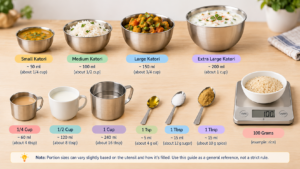
can be misleading without defining the bowl size, recipe and cooked quantity.
One person’s bowl may be 120 ml.
Another person’s may be 250 ml.
One dal may be thick.
Another may contain much more water.
If you want better accuracy, measure the actual cooked serving or calculate the recipe from the amount of dry pulses used.
Also Read : Sciatica
Step 3: Use Cereals and Pulses Together
Indian meals already offer useful cereal-pulse combinations such as:
- dal + rice
- roti + dal
- rajma + rice
- chole + roti
- idli + sambar
ICMR-NIN’s 2024 Dietary Guidelines state that an appropriate cereal combination of about 3:1 improves protein quality and that a balanced vegetarian dietary pattern can meet essential amino-acid needs.
Source: ICMR-NIN, Dietary Guidelines for Indians 2024, protein and amino-acid guidance. Official ICMR-NIN Dietary Guidelines 2024
The reason is that cereals and pulses have complementary amino-acid profiles.
This does not mean you need to calculate amino acids at every meal.
It means that a varied diet containing both food groups is generally more nutritionally useful than relying almost entirely on cereals.
Also Read : Piles
Step 4: Do Not Depend on Dal Alone
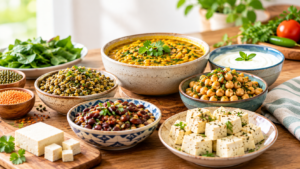
A practical vegetarian diet can use several protein-contributing food groups across the day.
These may include:
ICMR-NIN’s 2024 vegetarian plate similarly distributes protein across cereals, pulses, milk/curd, vegetables, and nuts and seeds rather than relying on a single food category.
The exact combination depends on whether you consume dairy, soy and other foods.
Variety is useful because different foods contribute different nutrients as well as different amino-acid profiles.
Also Read : Gut Bacteria
Step 5: Use Dairy Strategically If You Consume It
Milk and curd can make an Indian vegetarian diet easier to structure because they can be included alongside familiar meals.
Examples include:
Breakfast: milk or curd
Lunch: curd alongside roti, dal and vegetables
Snack: a curd- or milk-based option instead of relying only on biscuits or refined snacks
Dinner: curd where it fits the meal and your overall diet
ICMR-NIN’s vegetarian “My Plate” model includes 300 ml of milk/curd in its illustrative 2,000 kcal pattern and attributes roughly 10 g of crude protein to that food group. This is an example dietary pattern, not a universal prescription for every individual.
This does not mean consuming unlimited dairy.
It means recognizing that milk and curd can contribute to the day’s protein rather than being nutritionally invisible.
If you avoid dairy, pulses, beans, soy foods, nuts, seeds and the rest of the dietary pattern become more important.
Also Read : Uric Acid
Step 6: Treat Paneer as One Option, Not the Entire Strategy
Paneer can contribute useful protein, but a vegetarian diet does not need to become:
paneer at lunch + paneer at dinner + paneer snack
Protein planning should still provide food variety.
Paneer can also vary in fat, moisture and energy depending on the milk and preparation used.
So the useful question is not:
“Is paneer healthy?”
A better question is:
“Does this serving fit the rest of today’s diet and help me build an appropriate overall dietary pattern?”
The same principle applies to tofu.
Also Read : Mental Health
Step 7: Use Soy Foods Where They Fit Your Diet
Soy foods can provide another plant-protein option alongside pulses, beans, cereals, nuts, seeds and dairy where consumed.
Possible choices include tofu and other appropriately prepared soy foods.
But do not assume every food with “soya” in its name has the same nutritional profile.
Packaged products may contain different amounts of soy protein, starches, fats, sodium and other ingredients.
For packaged foods, check the nutrition label for that specific product.
Also Read : How to Improve Your Five Senses Naturally
Step 8: Nuts and Seeds Help—but They Are Not Just “Protein Foods”
Nuts and seeds contribute protein and are included as a distinct food group in ICMR-NIN’s vegetarian “My Plate” dietary pattern.
However, many nuts and seeds are also energy-dense because they contain substantial amounts of fat.
That does not make them “bad.”
It simply means protein should not be evaluated in isolation.
A modest serving can be a useful part of breakfast, snacks or meals, but consuming very large quantities solely to chase a protein number may also substantially increase total energy intake.
Also Read : Biohacking
Step 9: Upgrade Snacks—They Are an Easy Opportunity
Many common snack patterns may contribute relatively little protein, for example:
- tea + biscuits
- namkeen
- sugary beverages
- plain toast
A snack can instead become another opportunity to include a protein-containing food.
Depending on preference, practical options may include:
The goal is not to transform every snack into a “fitness meal.”
It is simply to recognize that snacks also contribute to the whole day’s diet.
Also Read : Zinc
A Practical Indian Vegetarian Meal-Upgrade Framework
Use this framework instead of copying a rigid meal plan.
| Food | Typical consideration | Practical protein addition |
|---|---|---|
| Poha | Often cereal-dominant | Add a meaningful protein-containing side |
| Upma | Often cereal-dominant | Add curd, milk, legumes or another suitable protein food |
| Idli | Protein contribution depends on recipe and portion | Pair with a meaningful quantity of sambar |
| Roti + sabzi | May be protein-light | Add dal, beans, curd or another suitable protein source |
| Rice + sabzi | May be cereal-heavy | Add dal, rajma, chole or a suitable equivalent |
| Tea + biscuits | Usually contributes little protein | Replace or supplement with a protein-containing snack |
| Dal + rice | Useful cereal-pulse base | Ensure dal is a meaningful portion |
| Khichdi | Depends on cereal ratio | Use an appropriate cereal-pulse balance |
| Salad | Often low in protein by itself | Add a suitable legume, dairy or soy component |
Also Read : Omega-3
These are upgrade patterns, not prescribed medical meal plans.
Example: Improve the Day Without Completely Changing the Food
Imagine someone normally eats:
Poha + tea
Lunch
3 rotis + sabzi + a small amount of dal
Snack
Tea + biscuits
Dinner
Rice + dal
The unhelpful approach would be:
“Throw away the entire diet and eat high-protein recipes all day.”
A more practical approach is to identify where protein-containing portions can be strengthened.
Breakfast
Keep poha.
Add a protein-containing food that fits the person’s preferences, such as curd or milk.
Lunch
Keep roti and sabzi.
Make the pulse, bean or dairy component a deliberate part of the meal rather than an afterthought.
Snack
Replace or supplement a consistently low-protein snack with something that contributes more meaningfully.
Dinner
Keep rice and dal.
Ensure the dal portion actually represents a meaningful quantity of pulses rather than only a small amount of diluted dal.
The result is not a “fitness diet.”
It is simply a more deliberately structured vegetarian day.
Also Read : Immunity
Do You Need to Eat “Complete Protein” at Every Meal?
You do not need to become obsessed with making every individual food a “complete protein” at every meal.
ICMR-NIN’s 2024 guidelines show that the essential amino-acid requirements in its balanced vegetarian dietary pattern can be met through an appropriate combination of foods. The guideline specifically notes that a cereal combination improves overall protein quality.
Cereals and pulses have complementary amino-acid profiles, which is one reason traditional combinations such as rice with dal or roti with pulses can be useful parts of a balanced diet.
Think whole-day dietary pattern, not “perfect protein food.”
Also Read : How to Keep Your Mind Calm During Panic News
Should You Add Paneer or Tofu to Every Meal?
No. Neither food needs to be present at every meal.
A better approach is variety.
Across different meals and days, protein-contributing foods may include:
- dal
- rajma
- chole
- other beans
- curd
- milk
- paneer
- tofu
- soy foods
- nuts and seeds
A varied dietary pattern is easier to sustain and provides a broader mix of nutrients.
Also Read : Fiber
Can You Get Enough Protein Without Protein Powder?
For many generally healthy people, an appropriately planned diet can provide meaningful amounts of protein without making protein powder the foundation of the diet.
ICMR-NIN’s 2024 Dietary Guidelines state that most athletes can obtain the recommended amount of protein through food alone without supplements. The guidelines also caution against unnecessarily high intakes of protein supplements.
Source: ICMR-NIN, Dietary Guidelines for Indians 2024. Official protein guidance in ICMR-NIN Dietary Guidelines 2024
That does not mean protein supplements are never useful.
A supplement may be convenient for some people because of food preferences, appetite, training demands or practical constraints.
But a protein powder should be viewed as an optional food/supplement product—not as proof that a vegetarian diet cannot provide adequate protein.
Also Read : Magnesium
How to Know If Your Vegetarian Diet Is Actually Meeting Your Target
Do not judge adequacy only by the number of foods you think of as “healthy.”
Instead, occasionally estimate the protein in the portions you actually consume.
Record:
- the food
- whether it was raw or cooked
- serving weight or quantity
- a protein value that matches that food state
Then calculate the day’s total.
This is important because raw and cooked weights are not interchangeable: water absorbed or lost during cooking changes the nutrient concentration per 100 g even when the underlying food is the same.
Someone may eat dal twice a day but consume relatively small amounts of pulses.
Another person may regularly consume pulses, milk, curd, soy and other protein-contributing foods and already have a very different total intake.
The useful question is not simply “Do I eat protein foods?” but “How much protein do my actual portions provide across the day?”
Also Read : Minerals
Four Common Mistakes
1. Counting Dry-Food Protein Against Cooked-Food Weight
2. Assuming “One Katori” Is Standardized
It is not. Household bowls can vary substantially in capacity, and the water content of dal also varies.
Also Read : Fiber
3. Looking Only at Protein per 100 g
Per-100 g values are useful for standardized comparison, but realistic serving size matters.
A food may rank highly per 100 g while usually being eaten in a much smaller portion.
4. Trying to Fix the Entire Day's Protein at Dinner
A more practical strategy is to include meaningful protein-contributing foods across breakfast, lunch, snacks and dinner rather than relying almost entirely on one late meal.
Also Read : Bones
A Simple Five-Step Check
At the end of the day, ask:
- Did breakfast contain a meaningful protein source?
- Did lunch contain pulses, beans, dairy, soy or another meaningful protein source?
- Did my snack contribute anything useful—or was it mostly refined carbohydrate?
- Did dinner contain a deliberate protein component?
- Did I eat a reasonably varied combination of protein sources across the day?
If several answers are “no,” there may be obvious areas to improve before moving to more complicated strategies.
What If You Are Vegan?
A vegan diet removes milk, curd and paneer, so protein planning relies more heavily on foods such as:
The basic principle remains the same:
Do not rely on one plant food.
Use dietary variety across the day. Because this article focuses on vegetarian diets broadly, detailed vegan protein planning deserves its own dedicated guide.
Also Read : Iodine
Who Should Not Use This Article as a Personalized Protein Prescription?
This guide is intended for generally healthy adults and is educational rather than a personalized medical diet.
Protein requirements and dietary decisions may need different assessment for:
- children and adolescents
- pregnancy
- lactation
- older adults with specific health needs
- kidney disease
- liver disease
- significant medical conditions
- competitive athletes with specialized training demands
- people following medically prescribed diets
ICMR-NIN’s general adult recommendations are population/reference guidance and should not be treated as an individualized prescription for every clinical or physiological situation.
People in these groups should seek individualized advice from an appropriately qualified health professional.
Also Read : Snoring Alert
The Bottom Line
Meeting protein needs on an Indian vegetarian diet usually does not require replacing familiar Indian food with a bodybuilding-style diet.
Start with your normal meals.
Identify where the meaningful protein sources are.
Strengthen meals that are heavily cereal-based.
Use a variety of pulses, beans, dairy or soy foods where appropriate, along with nuts and seeds.
Include cereals and pulses across the dietary pattern; ICMR-NIN notes that appropriate cereal-pulse combinations improve overall protein quality.
And evaluate the actual quantities you eat instead of assuming that a food is “high protein” simply because it appears on a protein-food list.
Protein adequacy is best understood in the context of the whole day’s food intake, not by searching for one magic protein food.
Also Read : How to Calculate Macros in Indian Food