A “30 g protein gap” means the difference between the protein already eaten and the target a person is using. It does not automatically mean everyone should add 30 g, and it is not a diagnosis of protein deficiency. The practical task is to compare foods that fit the remaining calories, dietary preference, budget and meal context.
Before using a target: ICMR-NIN lists 0.83 g/kg/day as the RDA for healthy adults, but pregnancy, older age, sport, illness and kidney or liver conditions can change the appropriate plan. Obtain individual professional advice when the target is clinical.
Table of Contents
Calculate the gap correctly
Use this formula: protein target − protein already eaten = remaining gap. If the target is 70 g and recorded meals provide 40 g, the remaining gap is 30 g. Do not subtract an incomplete food diary; include beverages, curd, dal, breads, snacks and recipe ingredients first.
The target should be grounded in an appropriate source. The Dietary Guidelines for Indians 2024 give an adult population reference and emphasize varied food-group intake. A calculator cannot determine whether a higher athletic target or a restriction is medically suitable.
Also Read : Vitamin Balance
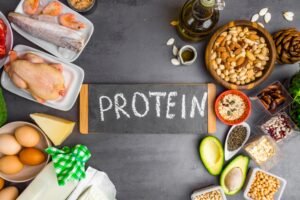
Example foods that provide roughly 30 g protein
These calculations use the approximate per-100-g entries displayed by the OurWellWisher tools. They are comparisons, not prescribed portions. Brand labels and preparations may differ.
| Food | Approximate amount for 30 g protein | Estimated calories | Important context |
|---|---|---|---|
| Soya chunks, dry | about 58 g | about 199 kcal | Weigh dry; final cooked weight is higher. |
| Firm tofu | about 173 g | about 250 kcal | Brands vary in water and protein. |
| Regular paneer | about 164 g | about 434 kcal | Higher fat and calories in this database entry. |
| Plain Greek-style yogurt | about 303 g | about 221 kcal | Use the pack label; ordinary curd is different. |
| Whole eggs | about 238 g edible portion | about 340 kcal | Egg count depends on edible weight and size. |
| Cooked chicken breast | about 97 g | about 160 kcal | Add oil, coating and gravy separately. |
| Lean cooked fish | about 115 g | about 148 kcal | Species and cooking method vary. |
Compare your remaining target
Enter 30 g, the calories still available, your food preference and budget.
Also Read : Vitamin D Deficiency
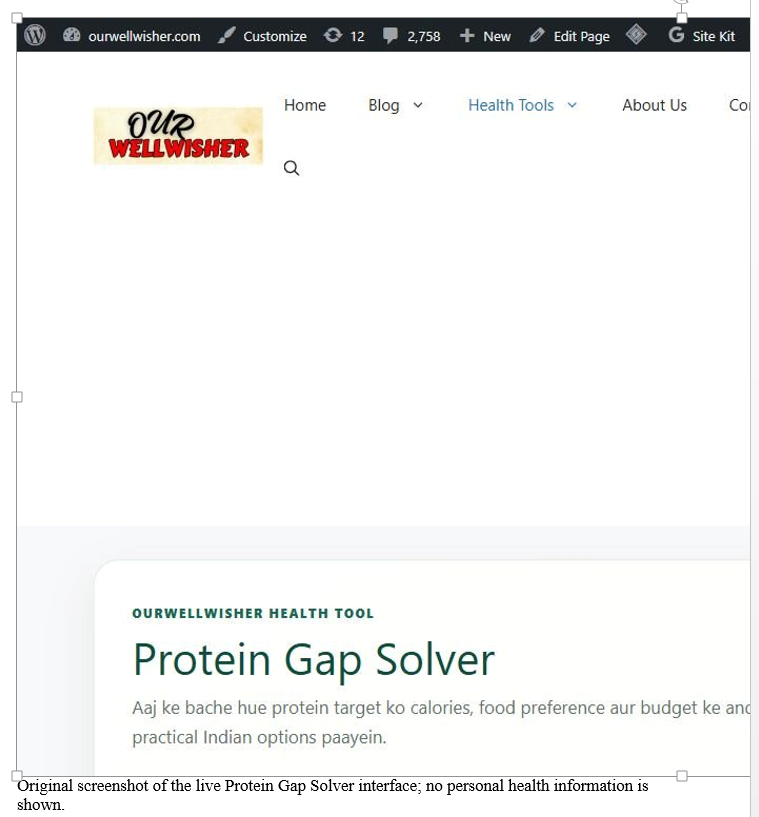
Protein Gap Solver walkthrough
- Enter the protein target you are using.
- Enter protein already eaten from measured meals.
- Confirm that the displayed gap is 30 g.
- Add the calories still available rather than the full-day calorie target.
- Select vegetarian, eggetarian or non-vegetarian preference.
- Enter a realistic budget if you want cost-aware comparisons.
- Review several options and check portions before choosing.
Also Read : Calcium Deficiency
Also Read : Gut Bacteria
Four practical ways to close the gap
1. One concentrated food
2. Two-food combination
3. Divide it across two meals
If 30 g remains at lunch, add part at an afternoon snack and part at dinner. Waiting until bedtime often leads to an impractically large portion.
4. Improve tomorrow’s distribution
Also Read : Biohacking
Why dal alone may require a large portion
Boiled rajma or chickpeas contain useful protein and fibre, but they also contain carbohydrate and water. At roughly 8.7–8.9 g protein per 100 g in common cooked entries, reaching 30 g from the pulse alone may require more than 330 g cooked, before counting gravy or rice. Dal remains valuable; it simply has a different protein-to-calorie profile from dry soy, lean meat or concentrated dairy.
ICMR-NIN notes that cereals and pulses complement each other’s essential amino-acid patterns. That supports a varied meal, but it does not make the protein grams in a small bowl equal to those in a concentrated source.
Also Read : Antioxidants
How calories change the answer
If 500 kcal remain, many options can fit. If only 200 kcal remain, the list narrows. Never enter an unrealistically low calorie allowance just to make the solver recommend the leanest food. Energy needs and dietary adequacy matter; a low number is not automatically healthier.
Cooking method belongs in the total. Frying, creamy gravy, butter, cheese and oil can add substantial energy without adding much protein. Calculate the complete recipe in the Indian Recipe Macro Calculator.
Also Read : How to calculate macros in Indian food
Budget comparison
Compare price per usable portion, not pack price alone. For a food containing 20 g protein per 100 g, a 30 g protein portion needs 150 g. Multiply the price per gram by 150. Add preparation losses where relevant and use local prices, because costs change by city, shop, brand and season.
Also Read : Zinc
Common mistakes
- Using a target copied from social media without context.
- Entering total daily calories instead of calories remaining.
- Mixing dry and cooked food weights.
- Ignoring cooking oil and gravy.
- Assuming a supplement is required.
- Forcing the entire gap into one meal.
- Treating the result as advice for kidney disease or another condition.
Also Read : Immunity
Frequently asked questions
Is a 30 g gap dangerous?
One estimated day does not diagnose deficiency. Look at usual intake and seek professional assessment for symptoms or medical concerns.
Can vegetarians complete 30 g without protein powder?
Often yes, using measured portions of soy, dairy, pulses and combinations, but the suitable choice depends on calories, tolerance and dietary pattern.
Should I eat all 30 g at once?
Not necessarily. Splitting it across meals may be more comfortable and practical.
Are solver results exact?
No. Database averages, labels and natural foods vary. Confirm packaged foods with their labels and count the full preparation.
Also Read : Magnesium
A better prevention strategy
If a 30 g gap appears repeatedly, examine the pattern rather than treating every evening as an emergency. Calculate three ordinary days, including a weekend day. Identify which meals repeatedly contribute very little protein and choose one realistic improvement for that meal. A measured curd, egg, tofu, besan or pulse addition at breakfast may reduce the late gap without increasing dinner size. Recalculate after changing the recipe because oil, accompaniments and serving size affect total energy. The goal is a sustainable eating pattern, not a perfect daily score. Appetite, cultural preference and food access belong in the decision.
Record the option you actually chose and whether its portion was comfortable. That feedback is more useful for future planning than repeatedly selecting the mathematically leanest result.
Also Read : Minerals
Sources and review status
- ICMR-NIN Dietary Guidelines for Indians 2024
- Indian Food Composition Tables 2017
- USDA FoodData Central data documentation
Editorial status: Arithmetic and source review completed internally. A registered dietitian must independently review target interpretation, clinical cautions and examples before publication.
Also Read : Iodine