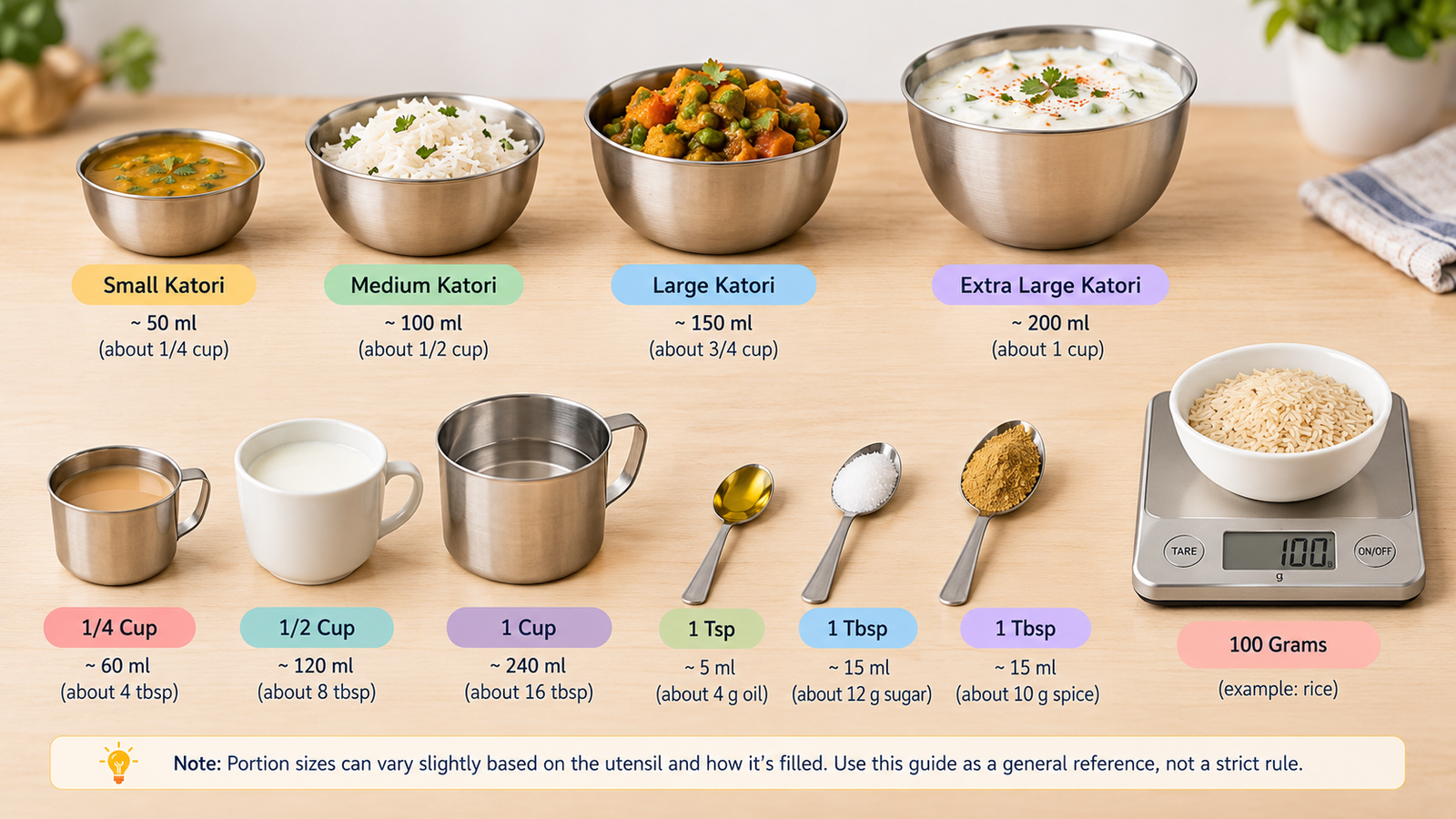
“One katori” sounds precise until two bowls are placed side by side. A small thali katori, a home bowl and a large serving katori can hold very different amounts. The food matters too: 200 ml of water, cooked rice, roasted chana and thick sabzi will not weigh the same.
The reliable method is to separate volume from weight. Calibrate your own utensil in millilitres, weigh the food when accuracy matters, and calculate a mixed dish from its ingredients and final yield. This guide uses ICMR-NIN reference measures and Indian Food Composition Tables (IFCT) values to show how.
Quick answer: There is no single universal gram value for one Indian katori. ICMR-NIN's 2024 reference set includes katoris of 115, 155, 200 and 360 ml, while some adult meal examples use 1 cup/katori = 200 ml as their stated reference. Millilitres measure volume; grams measure mass. Calibrate your bowl with water, then weigh the actual food or calculate it from the full recipe.
Table of Contents
How many ml is one Indian katori
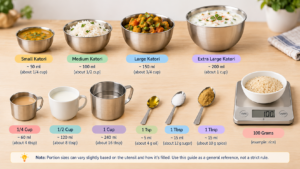
A katori has no single universal capacity. ICMR-NIN’s standardised reference set shows four different bowls. This is the clearest official answer to the common 150-versus-200 ml debate: both sizes are plausible reference bowls, but neither describes every katori in every Indian home.
ICMR-NIN reference katori sizes
ICMR-NIN reference katori sizes
| Reference utensil | Capacity | Relative to 200 ml | Published rim diameter and height |
|---|---|---|---|
| Small katori C9 | 115 ml | 0.575 cup | 7.5 cm × 3.4 cm |
| Small katori C8 | 155 ml | 0.775 cup | 7.7 cm × 3.9 cm |
| Medium katori C7 | 200 ml | 1.0 cup | 8.6 cm × 4.1 cm |
| Large katori C6 | 360 ml | 1.8 cups | 9.3 cm × 4.4 cm |
The capacities and dimensions are reproduced from ICMR-NIN’s suggested measuring katori/cup set. The relative-to-200-ml column is original arithmetic: capacity ÷ 200. ICMR-NIN, *Dietary Guidelines for Indians 2024*, Annexure I, p. 111
In the guideline’s adult meal examples, the stated convention is “1 cup/Katori = 200 ml.” That convention helps readers interpret those particular menus; it does not turn every domestic bowl into a 200 ml measure. ICMR-NIN, *Dietary Guidelines for Indians 2024*, adult diet example, p. 63
Also Read : Thyroid
Is one katori the same as one cup
Only when the source explicitly defines them that way. ICMR-NIN uses a 200 ml cup/katori in some menu examples, but recipe cups can be 200, 240 or 250 ml, and drinking cups are not calibrated measures. Check the number printed on a measuring cup or the definition given in the recipe or diet chart.
If no size is stated, write your portion as “my 185 ml bowl” rather than “one katori.” That one correction makes a food record far more interpretable.
Also Read : How to Improve Your Eyesight
Why are millilitres and grams not interchangeable
Milliliters measure volume—the space a food occupies. Grams measure mass—how much matter is present. The conversion depends on density and on how a food is prepared or packed.
- Water is close to 1 g per ml at ordinary room temperature, so it is useful for checking a vessel’s capacity.
- Cooked rice contains air gaps and its packing changes with grain type and serving method.
- Roasted chana leaves more air space than curd.
- A thin dal contains more water per spoon than a thick dal made from the same amount of dry pulse.
- Chopped vegetables settle differently from a smooth gravy.
This is why a table that assigns the same gram weight to every 200 ml food portion is not scientifically sound.
A useful conversion formula
Convert bowl volume to food weight
Use a density measured for the same food batch and the same packing method. This is not a universal rice or dal value.
Food weight in the bowl (g) = Bowl volume (ml) × Measured food density (g/ml)
Example: 155 ml × 0.80 g/ml = 124 g
Also Read : Iron Deficiency
How to measure your own katori in two minutes
Use a kitchen scale that reads in grams and a measuring jug if available.
- Place the dry katori on the scale and press tare so the display returns to zero.
- Fill the katori with water to the level you normally serve food—not automatically to the brim.
- Read the water weight. At ordinary kitchen temperatures, the same number is a close practical estimate of milliliters.
- Repeat once. If the readings differ, use the average.
- Mark or photograph the fill line and record the result, for example: “steel dal katori, usual line = 185 ml.”
If you do not have a scale, pour the water into a marked measuring jug. For very small spoons, a graduated medicine measure is more useful than an unmarked drinking glass.
Also Read : Hormonal Imbalance
Build a personal utensil reference
| Your utensil | Usual fill level | Measured capacity | Best use |
|---|---|---|---|
| Dal katori | Full, just below the rim | Approx. 200 ml | Dal, sambar, curry |
| Rice katori | Level, without a heap | Approx. 200 ml | Cooked grains |
| Tea cup | Usual serving level, below rim | Approx. 150 ml | Milk, tea, beverages |
| Teaspoon | Level, not heaped | Approx. 5 ml | Oil, sugar, seeds |
| Tablespoon | Level, not heaped | Approx. 15 ml | Oil, chutney, nut butter |
These are illustrative reference values, not measurements of your actual utensils. To check capacity, fill each utensil to the stated level with water and measure it using a measuring jug. For food portions, remember that 200 ml of cooked rice or dal does not weigh 200 g.
Also Read : Mental Health
Also Read : Biohacking
What do ICMR-NIN's spoon sizes mean
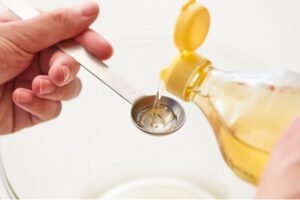
ICMR-NIN’s Annexure I depicts a tablespoon labelled 15 g and a teaspoon labelled 5 g in its standardised household-measure set. A household spoon can differ, and the weight held by a spoon also depends on the ingredient. Use a level calibrated spoon for consistency; “one spoon” should not silently mean a heaped spoon. ICMR-NIN, *Dietary Guidelines for Indians 2024*, Annexure I, p. 111
The difference matters most for energy-dense foods. FSSAI uses 9 kcal per gram as the energy conversion factor for fat. Therefore, 5 g of oil provides about 45 kcal and 15 g provides about 135 kcal; these are calculations from the conversion factor, not laboratory tests of a household spoon. FSSAI, *Labelling and Display Regulations*, consolidated Version VIII, energy conversion factors
ICMR-NIN’s 2020 brief note advises that visible fat/cooking oil should vary with energy need; it gives 20–50 g per person per day and an example ceiling of 27 g for a 2,000 kcal diet. That is a population-level guideline, not a reason to prescribe exactly 27 g to every reader. ICMR-NIN, *Brief Note on Nutrient Requirements for Indians 2020*, p. 3
Oil calorie calculation
These calculations use the FSSAI energy conversion factor for fat. A household spoon may not hold exactly 5 g or 15 g.
5 g oil × 9 kcal/g = about 45 kcal
15 g oil × 9 kcal/g = about 135 kcal
Also Read : Home Remedies
Which measurement should you use
| Situation | Most useful method | Why |
|---|---|---|
| Water, milk or plain drink | Millilitres from a calibrated cup | Liquids are naturally described by volume; use the package label for nutrients. |
| Oil, ghee, sugar or nut butter | Grams or a level calibrated spoon | A small serving error can materially change energy intake. |
| Raw rice, atta, dal, nuts or seeds | Grams before cooking | Raw edible weight matches many IFCT entries and meal plans. |
| Plain cooked rice or boiled pulse | Cooked grams with a cooked-food entry | Water uptake changes cooked weight. |
| Mixed dal, curry, khichdi or sabzi | Ingredients plus total cooked yield | Recipe ratios and water differ between kitchens. |
| Restaurant dish | Treat as an estimate | Portion, oil and recipe are usually unknown. |
| Casual balanced eating | Calibrated katori and consistent fill line | Repeatability may matter more than gram-level precision. |
FSSAI requires packaged-food nutrition information to state a metric reference amount in grams or milliliters beside the serving measure; a household measure such as a teaspoon, tablespoon or cup may also be provided. This is a useful reading rule: the metric amount on the label is the anchor, not the word “serving” alone. The consolidated Version VIII text current before this research date retains this wording. FSSAI, *Food Safety and Standards (Labelling and Display) Regulations, 2020*, Version VIII, regulation 5(3), p. 11
Also Read : Morning Rituals
Raw versus cooked weight: which one should you track
Use the weight state that matches the nutrition source. If the database entry is for raw rice, use raw rice grams. If the entry is for cooked rice, use the cooked portion weight. Never apply a raw per-100-g value to the same number of cooked grams.
Cooking mainly changes water and sometimes fat content. Dry rice and dal usually become heavier after absorbing water; chicken or vegetables may become lighter after losing water. The total protein in a batch does not multiply when water is added, but the protein per 100 g of cooked food becomes lower because the batch is heavier.
Calculate nutrients from the cooked batch yield
This method works for thin or thick recipes because it accounts for the final cooked yield.
Nutrient per serving = Total nutrient from all ingredients × Serving weight ÷ Total cooked batch weight
Also Read : Meditation
How much protein is in one katori of dal
Worked example: moong dal by batch yield
200 g × 23.88 g protein ÷ 100 = 47.76 g protein in the batch
If the finished batch is divided into four equal servings, each serving receives:
47.76 g ÷ 4 equal servings = 11.94 g protein per serving
Onion, tomato and other ingredients may add a small amount; oil adds energy but no protein. Water changes the volume and weight of the cooked dal, not the 47.76 g calculated from the dry pulse. IFCT values are analytical averages and real foods vary. ICMR-NIN, *Indian Food Composition Tables 2017*, Table 1, food code B010
If servings are not equal
Assume the cooked batch weighs 1,000 g and your filled katori contains 240 g of that batch. Its share is 240 ÷ 1,000 = 24%. Protein from the dal in that bowl is:
If a 240 g serving is 24% of a 1,000 g batch: 47.76 × 0.24 = 11.46 g protein
The 1,000 g yield and 240 g serving are deliberately illustrative. Replace them with your measured batch and portion weights.
Also Read : Body Parts
Also Read : Vitamin D Deficiency
How much protein do healthy Indian adults need
ICMR-NIN 2020 gives a protein EAR of 0.66 g/kg/day and an RDA of 0.83 g/kg/day for healthy Indian adults when protein quality assumptions are met. It also notes 1 g/kg/day for people consuming a cereal-based diet with low-quality protein. The EAR is intended to meet the estimated requirement of half of healthy people in a group; the RDA is a higher population reference designed to cover nearly all healthy individuals—not a personalized bodybuilding or clinical prescription. ICMR-NIN, *Brief Note on Nutrient Requirements for Indians 2020*, pp. 2 and 5
ICMR-NIN adult protein examples
| Healthy adult reference | RDA calculation | Result |
|---|---|---|
| 55 kg | 55 × 0.83 | 45.65 g/day; reported as 45.7 g/day |
| 65 kg | 65 × 0.83 | 53.95 g/day; reported as 54.0 g/day |
| 70 kg | 70 × 0.83 | 58.1 g/day; arithmetic illustration, not an individual prescription |
Source: ICMR-NIN Brief Note on Nutrient Requirements for Indians 2020.
Also Read : Yoga vs Exercise
Real Indian food examples: how protein portions add up
Real Indian food protein examples
| Food and IFCT code | Measurement basis | Example amount | Calculation | Approximate protein |
|---|---|---|---|---|
| Moong dal B010 | Raw or dry | 50 g | 50 × 23.88 ÷ 100 | 11.9 g |
| Masoor dal B013 | Raw or dry | 50 g | 50 × 24.35 ÷ 100 | 12.2 g |
| Wheat atta A019 | Raw flour | 60 g | 60 × 10.57 ÷ 100 | 6.3 g |
| Paneer L003 | Edible weight | 75 g | 75 × 18.86 ÷ 100 | 14.1 g |
| Whole cow milk L002 | Weight | 200 g | 200 × 3.26 ÷ 100 | 6.5 g |
| Boiled hen egg M004 | Edible cooked weight | 50 g | 50 × 13.43 ÷ 100 | 6.7 g |
| Skinless chicken breast N003 | Raw edible weight | 100 g | 100 × 21.81 ÷ 100 | 21.8 g |
Also Read : Gut Bacteria
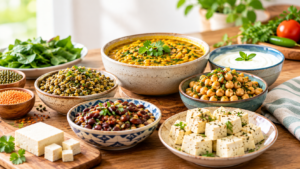
A practical vegetarian meal calculation
Consider a meal prepared with the following measured amounts:
- 50 g dry moong dal: about 11.9 g protein
- 60 g atta across the rotis: about 6.3 g
- 75 g paneer in a sabzi: about 14.1 g
Protein from three measured ingredients
This is a calculation example, not a suggested portion for everyone. Oil, gravy and accompaniments affect total meal energy.
11.9 g from moong dal + 6.3 g from atta + 14.1 g from paneer = about 32.3 g protein
Vegetables and other ingredients may add a little more. This is a calculation example, not a suggested portion for everyone. Paneer also contributes substantial fat, and the full meal’s energy depends on oil, gravy and accompaniments. ICMR-NIN, *Indian Food Composition Tables 2017*, food codes B010, A019 and L003
A practical egg-and-milk example
Two boiled eggs with a combined edible weight of 100 g provide approximately 13.4 g protein, and 200 g of whole cow milk provides approximately 6.5 g. Together they supply about 19.9 g protein before counting the rest of the meal. Use the actual package label for branded milk because fat and protein can differ by product. ICMR-NIN, *Indian Food Composition Tables 2017*, food codes M004 and L002
Also Read : Sodium Potassium
How should you use katoris for everyday portion control
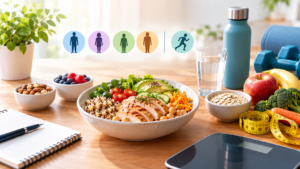
A calibrated katori is useful for consistency, even when you do not need laboratory-level accuracy. If your dal bowl is always filled to the same 185 ml line, you can compare your own servings across days. What you cannot safely do is copy a nutrition value for somebody else’s 150 ml recipe and assume it exactly describes your 185 ml bowl.
Use this confidence ladder:
- Best for packaged food: metric serving and nutrient panel on the current label.
- Best for home recipes: weighed ingredients plus total cooked yield.
- Good for repeat meals: your own calibrated utensil linked to a previously weighed portion.
- Approximate only: an uncalibrated katori, ladle, handful or restaurant bowl.
For habit-building, consistency may be sufficient. For insulin dosing, kidney diets, severe allergies or another clinical purpose, use the measurement method specified by the treating professional.
Also Read : Antioxidants
Common mistakes to avoid
Mistake 1: Treating 150 ml as the only standard katori
ICMR-NIN’s own reference set contains 115, 155, 200 and 360 ml vessels. State the capacity you used.
Mistake 2: Converting every ml directly to one gram
That shortcut is reasonable only for water-like liquids as a practical approximation. It does not work reliably for cooked rice, flour, nuts or dry sabzi.
Mistake 3: Applying raw nutrition data to cooked grams
If 100 g raw dal is cooked with water, the cooked batch weighs much more than 100 g. The protein has been distributed through that larger batch.
Mistake 4: Ignoring oil and ghee
Oil contributes energy even when it disappears into a tadka or gravy. Weigh the amount added to the recipe or use a level calibrated spoon.
Mistake 5: Calling a recipe database value “exact”
Two households can use different quantities of pulse, paneer, coconut, oil and water for the same dish name. A database number is an estimate unless its recipe matches yours.
Mistake 6: Treating an RDA as a personalised target
ICMR-NIN’s 0.83 g/kg/day is a reference for healthy Indian adults under stated assumptions. A clinician or qualified dietitian may use a different target for a specific condition or goal.
Also Read : Immunity
Also Read : Fiber
Do you need to weigh every meal forever
Usually not. Measure representative foods for a week or calibrate the utensils you use most often. Save the recipe and portion data. If the recipe stays similar, you can use the calibrated serving for routine tracking and recheck it when the bowl, ingredients or cooking method changes.
Stop and seek appropriate support if food tracking creates distress, rigid restriction, binge-restrict cycles or fear of ordinary meals. More precision is not automatically better health.
Also Read : Magnesium
Frequently asked questions
Is one katori 150 ml or 200 ml?
It can be either, or neither. ICMR-NIN’s reference set includes a 155 ml small katori and a 200 ml medium katori, plus 115 and 360 ml bowls. Its adult meal examples use 200 ml as the stated cup/katori convention. Measure your own bowl before converting a portion. ICMR-NIN, *Dietary Guidelines for Indians 2024*
How many grams is one 200 ml katori?
How many grams is one teaspoon?
The answer depends on the ingredient and whether the spoon is level or heaped. ICMR-NIN’s reference set labels its teaspoon 5 g, but an ordinary household spoon and a different ingredient may not match that value. Use a scale when a small error matters, especially for oil, ghee, sugar or supplements. ICMR-NIN, *Dietary Guidelines for Indians 2024*, Annexure I
How much cooked rice is one katori?
Is one katori of dal enough protein?
The bowl alone cannot answer the question. Protein depends mainly on how much dry pulse went into the batch and what share of the batch you ate. Compare the calculated meal and daily total with an appropriate reference; ICMR-NIN lists an RDA of 0.83 g/kg/day for healthy Indian adults under its protein-quality assumptions. ICMR-NIN, *Brief Note on Nutrient Requirements for Indians 2020*
Can I use a katori instead of a food scale?
Yes for consistent everyday serving, after calibration. Use a scale when exact ingredient amounts matter, when calculating a new recipe, or when a clinician has prescribed a precise therapeutic intake. Reweigh when the vessel, recipe or serving level changes.
Also Read : Minerals
The practical takeaway
Also Read : Vinegar Wonders
Measure the vessel once with water, weigh representative food portions, and calculate mixed dishes from the whole batch. Always record the bowl capacity, the exact food or recipe, and whether the nutrient source describes it raw or cooked.
Medical disclaimer: This article is for general educational purposes only and is not a substitute for professional medical advice, diagnosis or treatment. Consult a qualified healthcare professional or registered dietitian for guidance appropriate to your medical situation, especially during pregnancy, illness, recovery, intensive sport, or if you have kidney or liver disease, diabetes, an eating disorder, allergies or a prescribed therapeutic diet.
Also Read : Bones