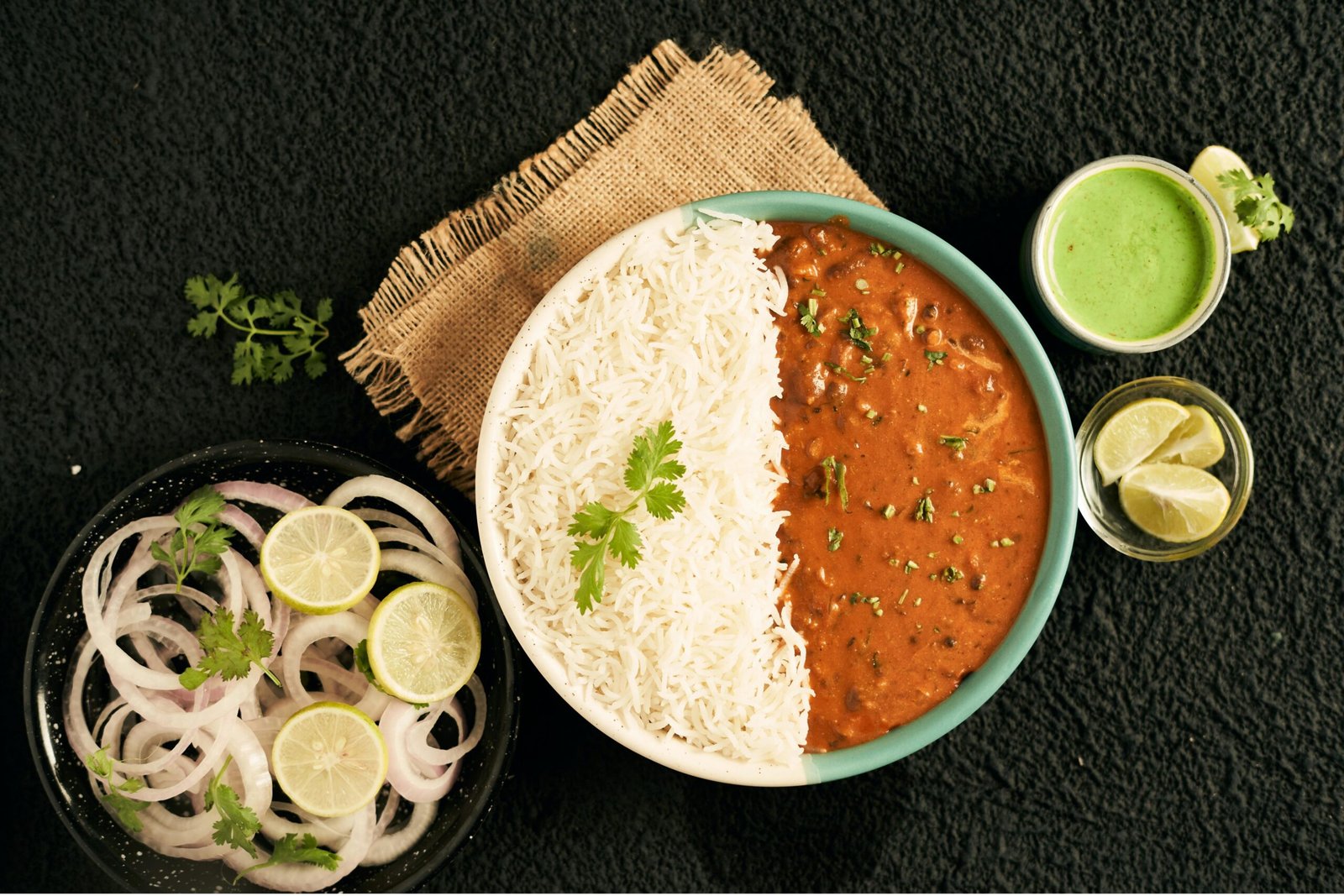
Calculating macros in Indian food is difficult for one simple reason: “one bowl” is not a standard recipe. Two bowls of dal can contain different quantities of lentils, water, oil and ghee. The useful solution is not to find one universal number. It is to calculate the ingredients in your own batch and divide the result by the portions you actually serve.
Table of Contents
What are macros?
“Macros” usually means protein, carbohydrate and fat. These nutrients supply most dietary energy: protein and carbohydrate are commonly estimated at about 4 kcal per gram and fat at about 9 kcal per gram. Fibre is displayed separately because it affects food quality and fullness, while the exact energy calculation used on a label or in a database can vary.
The ICMR–National Institute of Nutrition’s Dietary Guidelines for Indians 2024 emphasize a varied diet built from food groups rather than chasing a single nutrient. The same guidance lists a protein RDA of 0.83 g/kg/day for healthy adults, but that number is not a personal prescription for every medical or athletic situation.
Also Read : Fiber
The five-step method
- Choose the matching food entry. “Moong dal, raw” must be paired with a raw weight; “rajma, boiled” must be paired with a cooked weight.
- Weigh each meaningful ingredient. Include dal, atta, rice, paneer, vegetables, milk, nuts, seeds, oil, ghee, sugar, sauces and toppings.
- Calculate the complete batch. Water can change cooked weight, but it does not create protein, carbohydrate or fat.
- Decide the real serving count. If a pot feeds four equal portions, divide by four. If portions are unequal, weigh the cooked batch and the amount served.
- Use the result consistently. Save the recipe and reuse it only when the ingredients and portioning remain reasonably similar.
Also Read : Almonds vs Pistachios
Worked example: four-serving moong dal
The following is an educational calculator walkthrough using the database values currently displayed by the OurWellWisher tool. It is not a laboratory analysis.
Ingredient | Amount | Estimated kcal | Protein |
Moong dal, raw | 200 g | 694 | 48.0 g |
Onion, raw | 100 g | 40 | 1.1 g |
Tomato, raw | 150 g | 27 | 1.4 g |
15 g | 133 | 0 g | |
Whole batch | — | about 894 | about 50.4 g |
Per serving (1/4) | — | about 224 | about 12.6 g |
Spices are not shown because their small amounts would make little difference in this example. If you add cream, butter, coconut, peanuts or a large spice paste, include them. Rice and roti are separate foods and should be added to the meal total rather than hidden inside the dal estimate.
Try the same calculation
Search each ingredient, enter its measured weight, set servings to four and compare the per-serving result.
Also Read : Spice Secrets
Calculator walkthrough
- Enter a clear recipe name such as “Home moong dal – 4 servings”.
- Search for moong dal, raw, select it and enter 200 g.
- Add onion, tomato and cooking oil as separate ingredients.
- Set the number of servings to four.
- Review both the batch total and per-serving cards.
- If your pot produces five portions, change servings to five instead of editing the nutrient values.
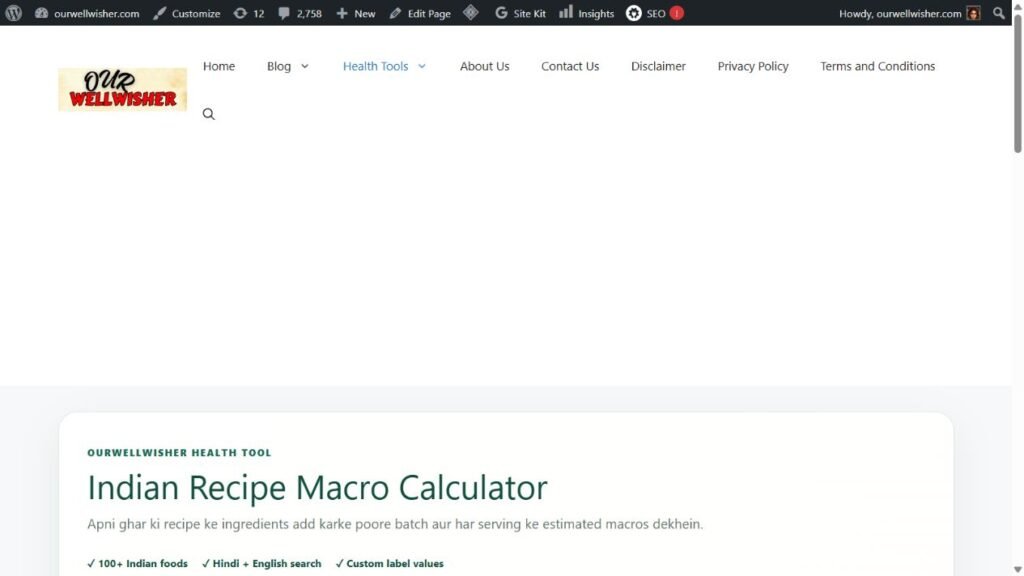
Original screenshot: the live OurWellWisher recipe calculator interface. Use the written example above to reproduce the calculation.
Also Read : Isabgol (Psyllium Husk)
Raw versus cooked entries
The biggest tracking error is mixing states. The Indian Food Composition Tables 2017 generally report edible food composition per 100 g and include specific food descriptions. USDA FoodData Central also separates foods by form and data type. A dry pulse contains little water, while a boiled pulse absorbs water and weighs more. That is why 100 g dry dal and 100 g cooked dal cannot be exchanged.
For a mixed home recipe, raw ingredient weights are usually the simplest. For a single cooked food already on your plate, use a matching cooked entry. Consistency matters more than switching methods halfway through.
Also Read : Omega 3
How to handle rotis, rice and mixed plates
For rotis, weigh the atta used for the full dough, include oil or ghee, and divide by the number of rotis. Water added to dough changes weight but not the batch macros. For rice, either calculate the raw rice used for the pot and divide the pot, or weigh your cooked portion and select a cooked-rice entry.
For a thali, calculate components separately: roti, rice, dal, sabzi, curd, pickle and sweets. This makes it easy to change one portion without rebuilding the entire meal.
Why labels and databases disagree
Food values are estimates, not immutable constants. Variety, soil, season, processing and laboratory method can produce variation. USDA explains that Food Data Central combines analytically derived foods, survey foods, branded label data and legacy references. Packaged products may be reformulated. For a branded paneer, bread or protein powder, the package label is often more relevant than a generic average.
Accuracy checklist
- Use a kitchen scale and tare the container.
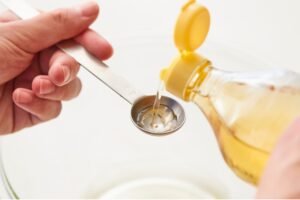
- Measure oil before pouring it into the pan.
- Use raw entries with raw weights and cooked entries with cooked weights.
- Count the whole batch before dividing servings.
- Record calorie-dense garnishes.
- Keep recipes separate when ingredients differ substantially.
- Treat every result as an estimate and monitor real-world outcomes.
Also Read : Vitamin B12
What to do after calculating a meal
Also Read : Zinc
Frequently asked questions about macros
Can I calculate macros without a scale?
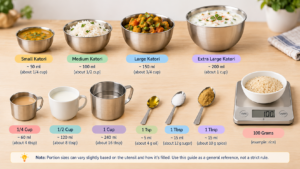
You can estimate, but the uncertainty is larger. Weigh your usual katori, spoon and roti once to create a more useful personal portion reference.
Should spices be counted?
Does cooking destroy protein?
Cooking changes structure, digestibility, water and sometimes nutrient retention. It does not explain the large raw-versus-cooked per-100-g difference by “losing” most protein; dilution by absorbed water is the main reason in boiled pulses.
Are macros target suitable for everyone?
No. Requirements depend on health, age, body size, pregnancy, training and clinical context. Use professional advice when the decision is medical.
Also Read : Magnesium
A repeatable weekly workflow
You can eventually stop measuring every ingredient. Start with the meals you repeat most often: one dal, one sabzi, a roti dough and a breakfast. Measure each recipe carefully once, name it clearly and note the cooked yield. When the recipe changes—more oil, a different paneer, fewer servings or a restaurant version—create a new calculation instead of silently reusing the old one. Review the result against hunger, energy, training and any professional plan. Macro tracking is most useful when it reduces uncertainty; it is not useful when normal variation causes anxiety. If tracking becomes rigid or distressing, stop and seek appropriate support.
Sources and review status
- ICMR-NIN: Indian Food Composition Tables 2017
- ICMR-NIN: Dietary Guidelines for Indians 2024
- USDA FoodData Central documentation
Editorial status: Source and arithmetic review completed internally. Independent review and sign-off by a qualified registered dietitian is still required before publication.
Also Read : Minerals