Indian portion size guide is a practical guide for estimating food intake without pretending that every homemade portion is identical. Ingredient brand, raw weight, cooking water, oil and serving size can all change the final number.
Household utensils vary, so a one-time gram measurement makes future tracking more repeatable. Use the numbers as planning estimates—not as a diagnosis or a medical diet prescription.
Table of Contents
Start with the quantity you actually use
For a homemade dish, list every meaningful ingredient, including cooking oil, milk, curd, nuts, seeds, sauces and toppings. Enter raw packaged weight when possible, calculate the full cooked batch, then divide by the number of portions actually served. This is more useful than copying a generic value for “one bowl”.
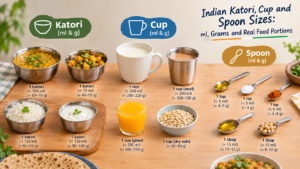
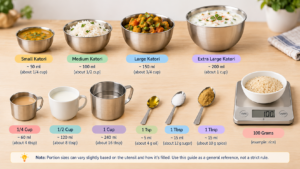
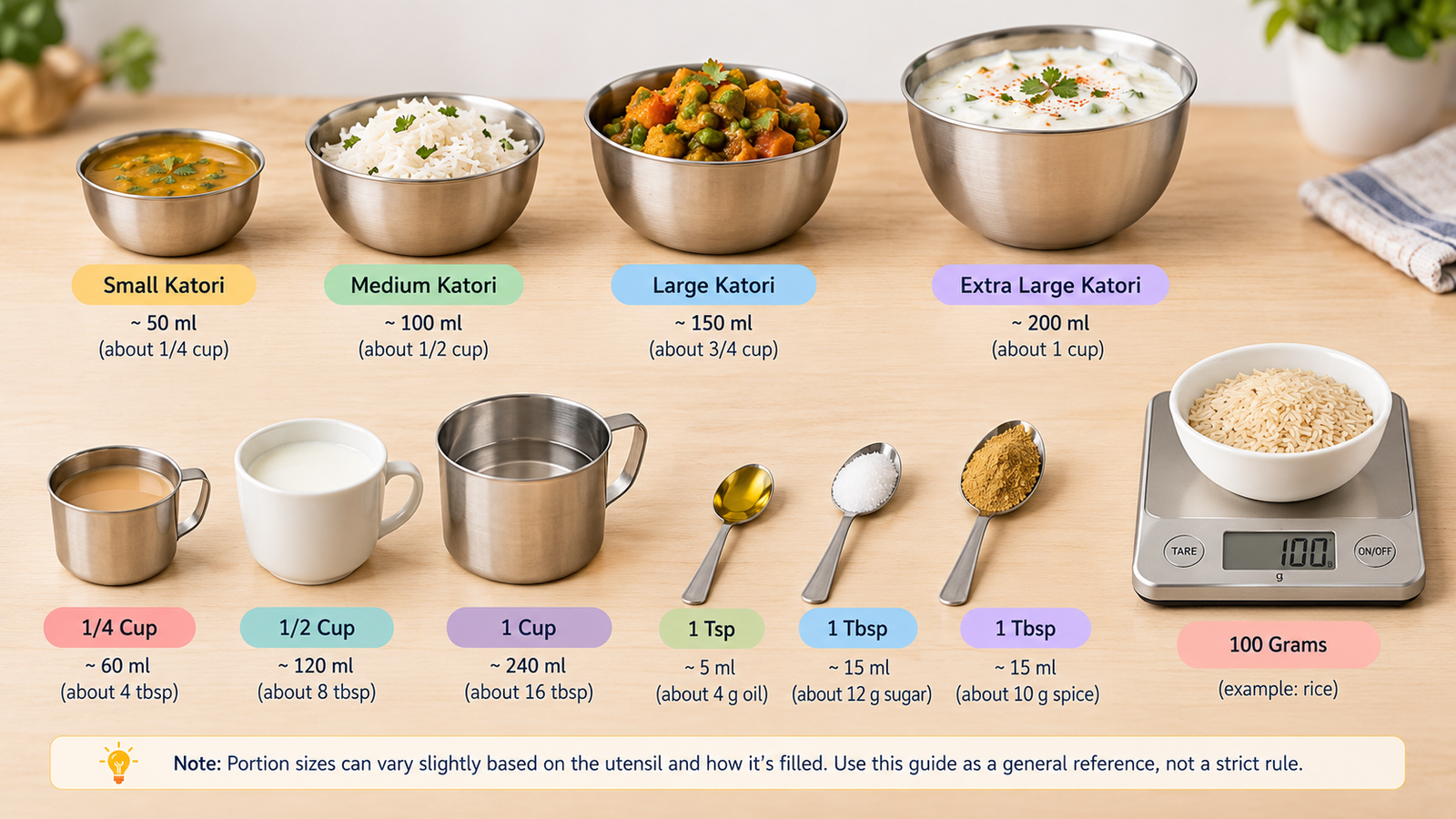
Place an empty katori on a scale, tare it, fill it as usual and record the food weight; repeat for thin liquids and dense foods because equal volume does not mean equal weight. The correct result for your plate depends on your quantities, so measure once and save the result for future meals.
After calculating the meal, compare its protein with your daily target. If a gap remains, enter the remaining grams, calories, food preference and budget in the Protein Gap Solver. It suggests practical combinations; it does not prescribe treatment.
Editorial note: Examples are educational estimates. For Indian foods, compare reliable food-composition data and the label of the product you use; your measured recipe and cooked yield provide the most relevant serving estimate.