Protein recommendations can feel confusing because there is no single number that suits everyone. Your daily requirement depends on your body weight, activity level, age, overall calorie intake and health status.
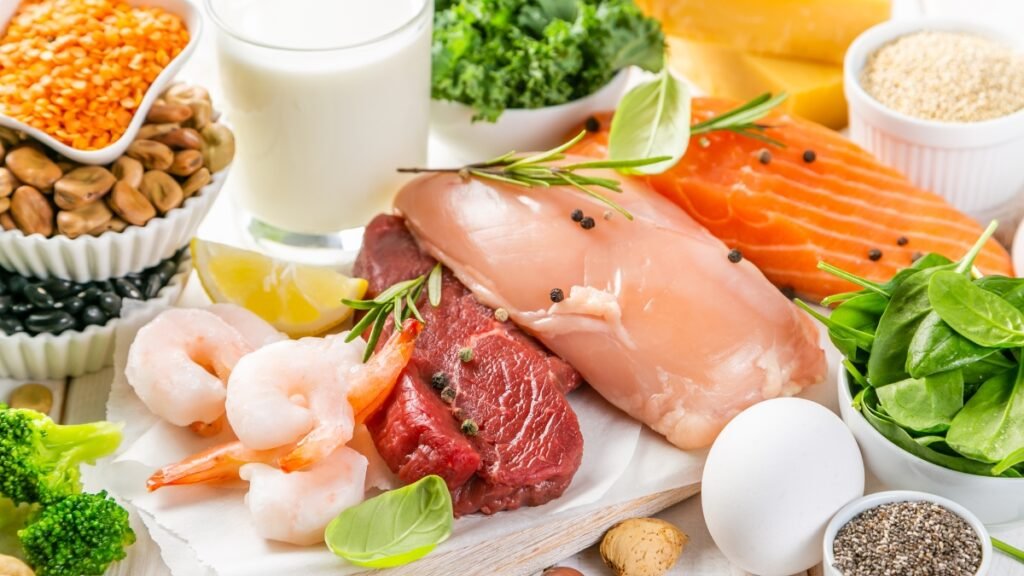
Table of Contents
Why Does Your Body Need Protein
Protein provides amino acids that the body uses to maintain and repair muscles, skin, organs and other tissues. It also contributes to enzymes, hormones and many normal biological processes.
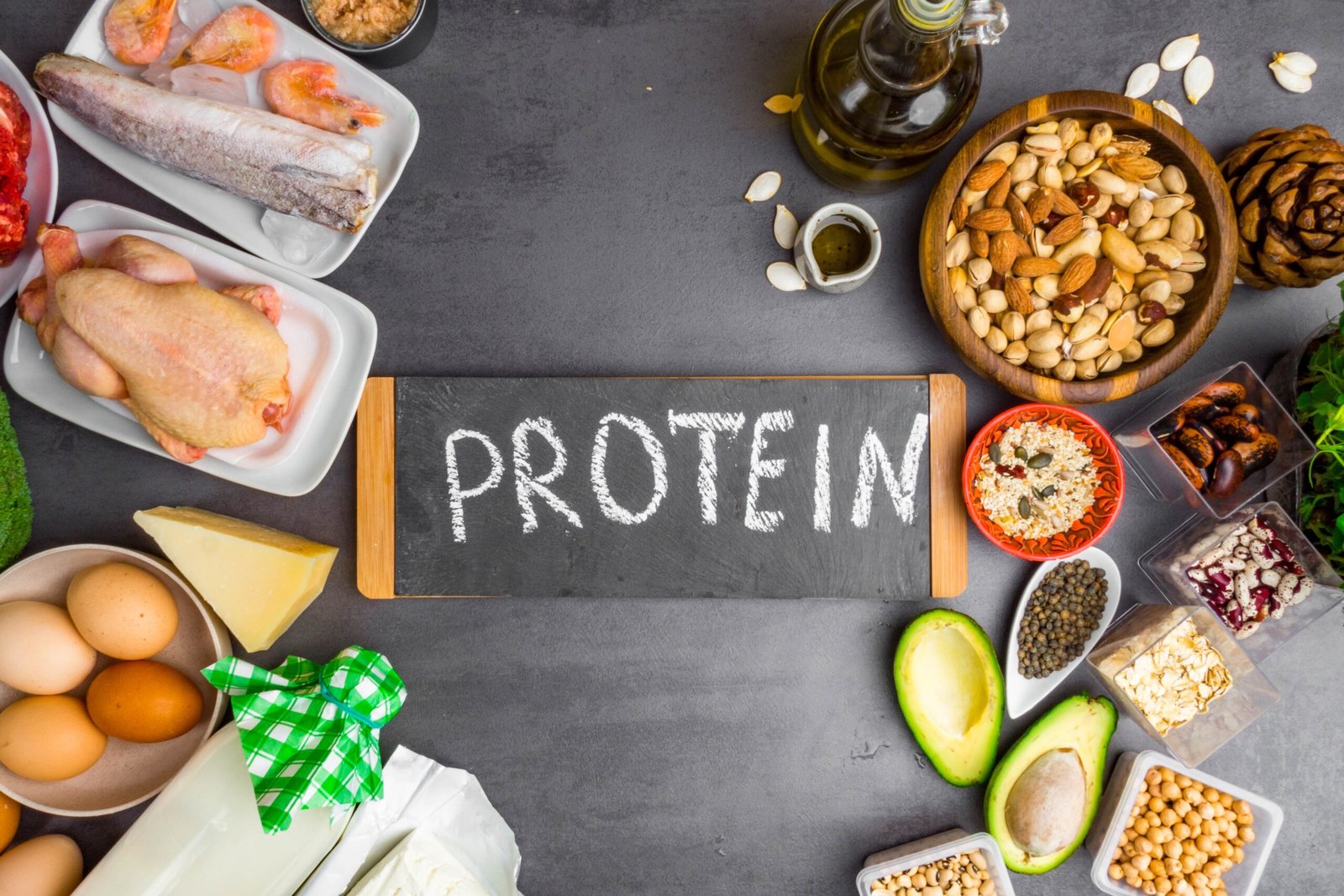
Your body continually breaks down and rebuilds proteins. Eating sufficient protein supplies the amino acids needed for this ongoing process. Protein can come from meat, eggs and dairy products, but it is also available from beans, lentils, soy foods, nuts, seeds and grains.
The goal is not necessarily to eat as much protein as possible. It is to consume an appropriate amount while maintaining a balanced, nutrient-dense diet.
Also Read : Calcium Deficiency
How Much Protein Do I Need Per Day
For generally healthy adults, the European Food Safety Authority sets a population reference intake of 0.83 g of protein per kilogram of body weight per day. This figure is intended to meet the needs of most adults rather than represent an ideal target for every fitness goal. EFSA source
Use this basic formula:
For example, a 70 kg adult would calculate 70 x 0.83, which equals approximately 58 grams of protein per day.
If you know your weight in pounds, divide it by 2.2 to convert it to kilograms. For example, 154 lb divided by 2.2 equals 70 kg.
You can also use the OurWellWisher Macro Calculator to estimate your protein, carbohydrate and fat targets together.
Remember that 58 grams of protein does not mean eating 58 grams of chicken or lentils. It refers to the amount of protein contained inside all the foods and drinks consumed during the day.
Also Read : Migraine
Daily Protein Requirements by Activity Level
The following ranges provide a practical starting point for generally healthy adults:
| Activity or goal | Approximate daily protein |
|---|---|
| Mostly sedentary adult | 0.8-0.83 g/kg |
| Recreational exercise | Around 1.0-1.4 g/kg |
| Regular strength or endurance training | 1.4-2.0 g/kg |
| Weight loss with resistance exercise | Often 1.2-1.6 g/kg, depending on the individual |
The International Society of Sports Nutrition states that 1.4-2.0 g/kg/day is sufficient for most exercising individuals seeking to build or maintain muscle. This range applies to healthy exercising adults and should not automatically be used by everyone.
International Society of Sports Nutrition position stand
These numbers are estimates. Training volume, calorie intake, recovery, age and medical conditions can all affect an individual target.
Also Read : How to Improve Your Memory
How Much Protein Do You Need for Weight Loss
Protein alone does not cause weight loss. Weight change is strongly influenced by overall energy intake, food choices, activity and consistency.
However, eating adequate protein during a calorie deficit may support fullness and help preserve lean tissue. A scientific review reported potential benefits from diets containing approximately 1.2-1.6 g/kg/day, sometimes distributed as roughly 25-30 grams per meal. The researchers also noted that long-term adherence remains an important limitation. PubMed review
A practical approach is to:
- Estimate your daily calorie needs with the OurWellWisher Calorie Calculator.
- Choose a moderate and sustainable calorie target.
- Set an appropriate protein target.
- Include protein-rich foods in each main meal.
- Combine the plan with resistance exercise when appropriate.
Higher protein intake cannot compensate for an unsustainable diet. Fiber-rich vegetables, fruits, whole grains and suitable sources of dietary fat still matter.
Also Read : Biohacking
How Much Protein Do You Need to Build Muscle
People performing regular resistance training generally need more protein than sedentary adults. For most healthy exercising adults, 1.4-2.0 g/kg/day is a useful evidence-based range. ISSN research record
For a person weighing 75 kg, this equals approximately 105-150 grams of protein per day.
This does not mean everyone weighing 75 kg needs 150 grams. Someone beginning a moderate training programme may choose a target closer to the lower end, while a person completing demanding resistance training may require more.
Total daily intake is only one part of muscle development. Progressive training, sufficient calories, sleep and recovery are also necessary. Consuming more protein without an appropriate exercise program will not automatically produce muscle growth.
Also Read : Sodium Potassium
Should Protein Be Divided Between Meals
Eating all your daily protein in one meal is rarely the most practical approach. Spreading it across breakfast, lunch, dinner and an optional snack makes the target easier to achieve.
The ISSN review suggests approximately 20-40 grams of high-quality protein per serving for many exercising adults, although the ideal amount depends on body size, age and the meal’s composition. ISSN position stand
Someone targeting 100 grams per day might divide it as follows:
- Breakfast: 25 g
- Lunch: 30 g
- Snack: 15 g
- Dinner: 30 g
You do not need to hit the exact same quantity at every meal. The daily pattern and overall diet are more important than perfect mathematical precision.
Also Read : Antioxidants
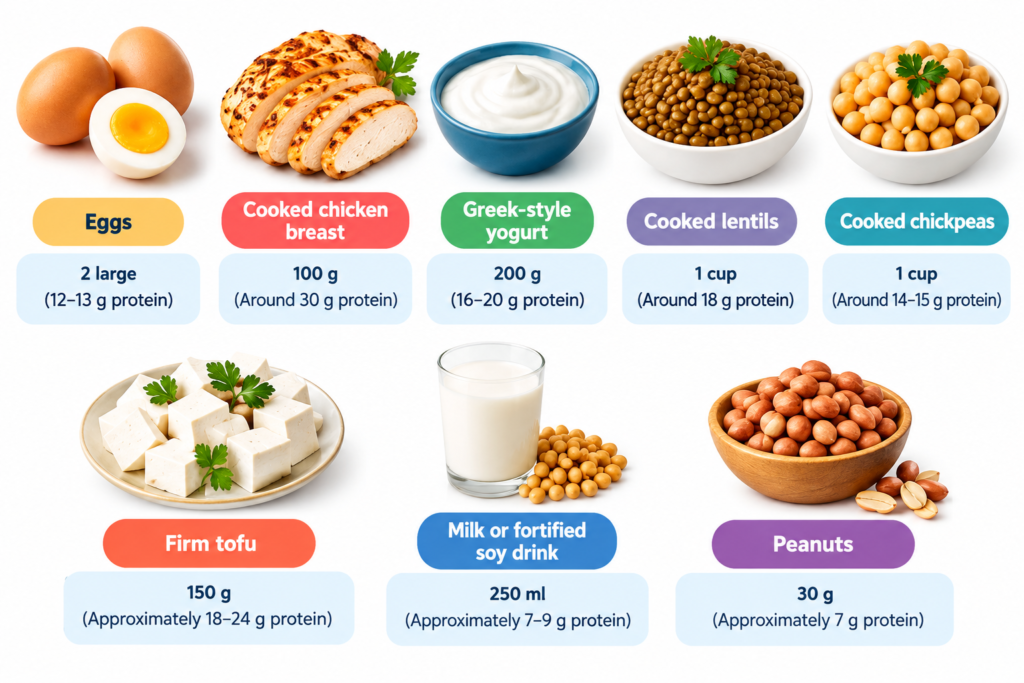
Which Foods Provide Protein
| Food | Example serving | Approximate protein |
|---|---|---|
| Eggs | 2 large | 12-13 g |
| Cooked chicken breast | 100 g | Around 30 g |
| Greek-style yogurt | 200 g | 16-20 g |
| Cooked lentils | 1 cup | Around 18 g |
| Cooked chickpeas | 1 cup | Around 14-15 g |
| Firm tofu | 150 g | Approximately 18-24 g |
| Milk or fortified soy drink | 250 ml | Approximately 7-9 g |
| Peanuts | 30 g | Approximately 7 g |
Also Read : Raw vs Cooked Food
Check the nutrition label or a reliable food-composition database when accuracy matters.
Plant-based eaters can meet their needs by consuming a varied diet containing lentils, beans, chickpeas, tofu, tempeh, soy drinks, peas, nuts, seeds and suitable grains. Every individual meal does not need to contain a perfect combination of amino acids; variety across the diet is the more practical focus.
Also Read : Gut Bacteria
What Might a High Protein Day Look Like
Here is a flexible example, not a personalized meal prescription:
Breakfast: Greek-style yogurt with oats, fruit and seeds. Approximate protein: 20-25 g.
Lunch: Lentil bowl with rice, vegetables and yogurt. Approximate protein: 25-30 g.
Snack: Roasted chickpeas or milk or fortified soy drink. Approximate protein: 8-15 g.
Dinner: Tofu, fish or chicken with vegetables and whole grains. Approximate protein: 30-35 g.
The complete day may provide approximately 85-105 grams, depending on ingredients and serving sizes.
Do You Need Protein Powder
Protein powder is optional. It can be convenient when work, travel, appetite or dietary restrictions make it difficult to obtain enough protein from meals.
It is not inherently better than food. Whole foods can provide protein alongside fiber, vitamins, minerals and other nutrients. A supplement should fill a genuine gap rather than replace most meals.
When selecting one, examine:
- Protein per serving
- Added sugar
- Ingredients and allergens
- Serving size
- Independent quality testing, where available
- Whether the product suits your diet
People taking medication, pregnant or breastfeeding individuals, and anyone with a medical condition should discuss supplements with an appropriate healthcare professional.
Also Read : Zinc
Can Eating Too Much Protein Be Harmful
Very high protein targets are unnecessary for most people. They can also make a diet harder to balance if protein products replace vegetables, fruits, whole grains or other important foods.
People with chronic kidney disease may need an individually adjusted protein intake. The National Institute of Diabetes and Digestive and Kidney Diseases advises people with CKD to work with a dietitian or healthcare professional to determine the appropriate amount and sources of protein. Needs may also differ for people receiving dialysis. NIDDK guidance
Speak with a qualified professional before substantially changing protein intake if you have kidney or liver disease, are pregnant or breastfeeding, have undergone bariatric surgery, take relevant medication or require a therapeutic diet.
Also Read : Immunity
The Practical Bottom Line
If you are a generally healthy, mostly sedentary adult, approximately 0.8-0.83 g/kg/day is a reasonable reference point. If you exercise regularly, your requirement may fall closer to 1.4-2.0 g/kg/day, depending on your training and goals.
Use the OurWellWisher Macro Calculator to produce a starting estimate and the Calorie Calculator to understand how protein fits into your overall energy intake. Treat the result as a planning tool, not a diagnosis or medical prescription.
Also Read : Magnesium
Key Takeaways
- Most generally healthy adults need approximately 0.8-0.83 g/kg/day.
- Exercising adults may require around 1.4-2.0 g/kg/day.
- Protein can support weight management, but total calorie intake still matters.
- Both animal and varied plant-based diets can provide sufficient protein.
- Medical conditions may require personalised professional guidance.
Also Read : Bones
Frequently Asked Questions
Is 100 grams of protein per day too much?
How can I calculate protein using my body weight?
Can vegetarians get enough protein?
Yes. Lentils, beans, chickpeas, tofu, tempeh, soy drinks, nuts, seeds, dairy products and eggs, where included, can contribute to daily protein needs.
Is protein powder necessary for muscle gain?
No. Muscle-building protein requirements can be met through food. Protein powder is primarily a convenient option when regular meals do not provide enough.
Does eating more protein cause weight loss?
Not automatically. Higher-protein diets may support fullness and preservation of lean tissue, but weight loss still depends substantially on overall calorie intake, activity and adherence.
Should I use actual or goal body weight?
Actual body weight works for a basic estimate, but it may overstate requirements for some people with substantial excess body weight. A registered dietitian can select a more appropriate calculation method for individual circumstances.
Also Read : Iodine